Key Takeaways:
- Keel pencils outperform standard pencils on rough lumber. The flat body prevents rolling, the thick lead resists breaking, and the bold line stays visible through sawdust and rough grain.
- Sharpen to a chisel point, not a cone. A proper flat edge gives framers both a bold layout line and a fine scribe line from the same pencil, versatility that a round pencil simply can't match.
- Match your marking tool to the surface. Carpenter pencils excel on framing lumber, but wet concrete, slick metal, or dusty surfaces may require a marker, crayon, or soapstone for reliable results.
A standard pencil on rough framing lumber is a liability. The line is too thin to read through sawdust, the tip breaks on the first knot, and the mark disappears before the saw gets there. Framers figured this out early and switched to keel. Not because it's traditional. Because it works where a standard pencil doesn't.
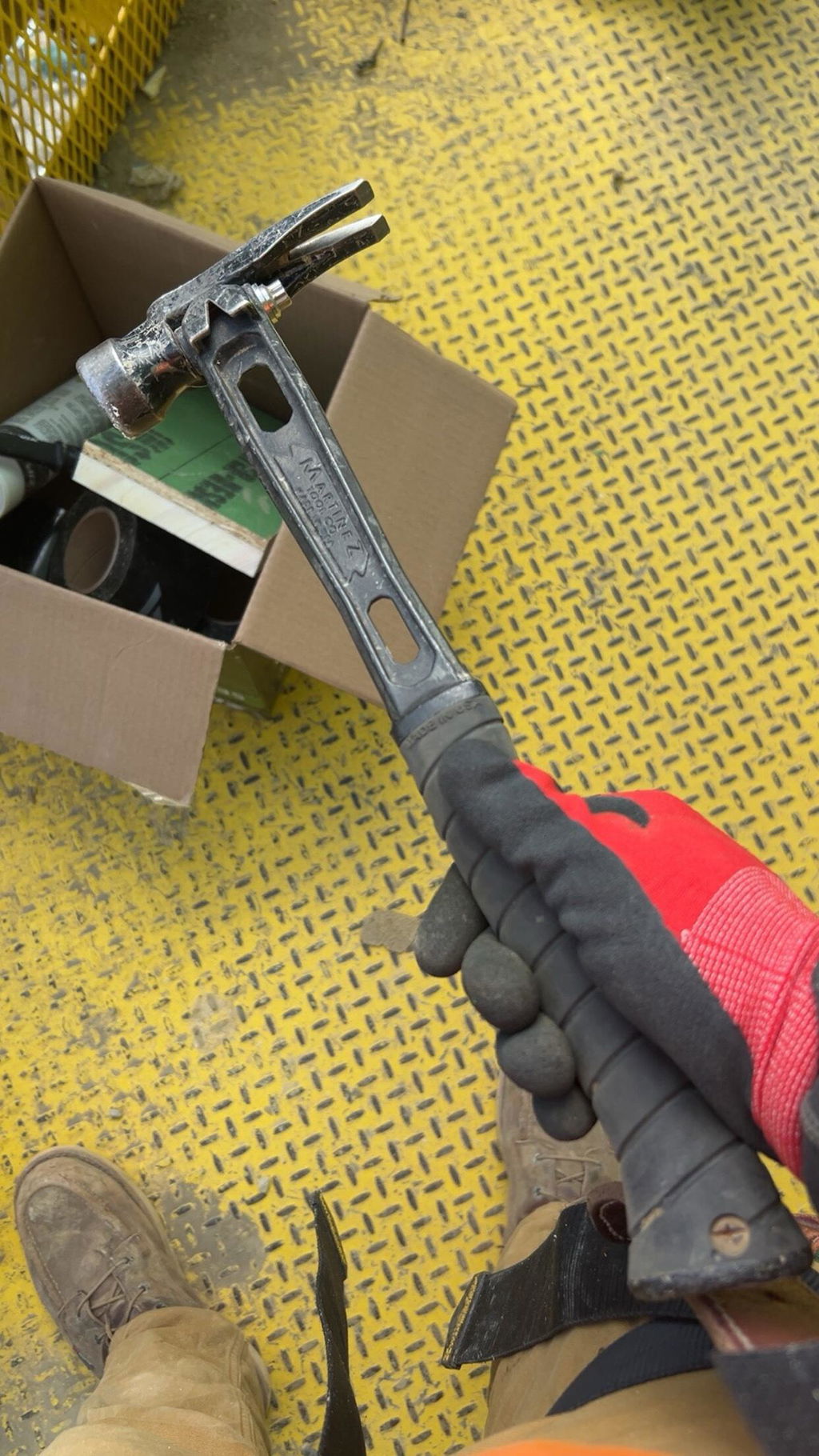
At Martinez Tools, we build the keel holder for tradesmen who mark lumber all day and need both keel and pencil accessible without digging through a pouch every time. American-made, purpose-built, and designed around the way layout work actually runs on a framing site.
In this piece, we'll cover the keel vs. standard difference, why framers reach for a keel on every job, where round pencils fail, and how to keep a carpenter pencil sharp.
Keel Pencil vs. Standard Pencil: What's The Actual Difference?
The difference is in shape and core. A carpenter pencil is flat and rectangular with a wide, thick lead. A standard pencil is round with a thin core. If you're building out your marking and measuring toolkit, our Carpentry Tools List: 25 Must-Have Tools covers everything you need on the job site.
Body Shape
The keel's flat body won't roll off a beam, a sawhorse, or a subfloor. A round pencil rolls, drops, and disappears into the cut pile.
Lead Core
The keel's wide lead is more durable under hand pressure. A standard pencil's thin core is more prone to breaking when it catches on knots, grain ridges, or rough stock.
Mark Quality
A carpenter pencil can lay down a thicker, more visible line than a standard pencil, especially on rough framing lumber. A standard pencil leaves a fine mark that vanishes on rough stock.

Why Framers Use Keel Pencils Over Standard Pencils On Every Job
Framers pick keel pencils because they survive the conditions that round pencils can't. The flat body, thick lead, and bold line all serve layout work. For a deeper look at what belongs in a professional framing kit, see our guide on Framing Tools for Professionals.
Speed of Layout
A thick line reads fast from a distance. You mark, step back, and cut without squinting.
Durability in the Pocket
The flat shape sits flush in an apron pocket without rolling out. It takes drops and bumps without the core shattering inside the body.
One Tool, Many Surfaces
A carpenter pencil works well on framing lumber and many rough jobsite surfaces, though slick metal, wet concrete, or dusty surfaces may require a marker, crayon, soapstone, or a specialized marking tool. A round pencil struggles on anything coarser than paper.
Where A Standard Pencil Fails On Rough Lumber And Job Site Surfaces
A standard pencil fails because its round body and thin core aren't built for coarse, dirty, wet conditions. Framing punishes it fast.
Snapping Under Pressure
Press a fine graphite tip into rough grain, and it can break. You spend more time re-sharpening than marking.
Faint Lines on Coarse Stock
Thin marks get lost in the texture of rough-sawn lumber. A cut line you can't see is a cut you'll redo.
No Grip on Wet or Slick Surfaces
A wider carpenter-pencil lead may show better than a fine graphite point on some rough surfaces, but wet concrete and slick metal often require a marker, crayon, soapstone, or specialized layout pencil.

Carpenter Pencil Sharpening: How To Keep A Keel Pencil Work-Ready
Sharpen a keel pencil to a chisel point, not a cone. The flat edge is what gives you both a bold line and a fine one from the same tip.
The Chisel Point
Shave both flat faces toward the lead until you expose a wide, flat edge. Turn the pencil on its corner for a thin scribe line, or lay it flat for a bold mark.
Pairing your pencil with the right layout square makes this even more effective. Learn how to use a Speed Square to get cleaner, faster layout lines every time.
Sharpening Frequency
Touch up the edge whenever the line thickens or the point rounds off. A quick pass keeps layout marks accurate all day.
Tools for the Job
Use a dedicated carpenter pencil sharpener for a clean, repeatable edge, or a utility knife when you're moving fast on the deck.
Selecting The Best Pencil For Framing Layout Under Harsh Job Site Conditions
The best pencil for framing layout matches the lead hardness and body to the surfaces you mark most. Match the lead to the job. For a full breakdown of what professionals reach for on the job site, our Carpenter Tools: A Complete List is a solid reference.
Lead Hardness
Harder leads, such as H or 2H, hold a point longer and smear less; softer grades, such as HB or B, leave darker marks but wear faster. For wet or slick surfaces, consider a specialized marker or crayon.
Body and Lead Width
A wider lead core survives more pressure and marks longer between sharpenings. A solid flat body takes drops without cracking the core inside.
Refillable vs. Wood
Mechanical keel pencils skip sharpening with a click-out lead. MTC wood-body pencils give you the classic feel and let you shape a custom chisel edge to your work.
When To Use A Carpenter Pencil Sharpener vs. A Blade On The Job
Use a carpenter pencil sharpener for consistency; use a blade for speed. Both keep the chisel edge working.
Use the Sharpener
A dedicated sharpener can produce a more consistent edge and may reduce waste compared with aggressive knife sharpening. It keeps a clean edge for precise layout.
Use a Blade
A utility knife is always on your hip and shapes the point in seconds. It gives you control over the exact edge you want, though it burns more lead.
The Practical Mix
Keep a sharpener in the truck box for setup and a blade in your pocket for the deck. That way, you're never stuck with a dull pencil.

Final Thoughts
On a framing site, a standard pencil is the wrong tool, full stop. The keel pencil's flat body, thick lead, and bold line are built for the conditions that framers actually work in. Sharp it right, match it to your surfaces, and keep one accessible all day. At Martinez Tools, we build around that reality with American-made holders that put both keel and pencil right where you need them, no digging, no downtime.
Frequently Asked Questions: Carpenter Pencil vs. Sharpened Pencil
What is the difference between a carpenter's pencil and a pencil?
A carpenter's pencil is flat with a wide lead that resists breaking and won't roll, while a standard pencil is round with a thin core meant for paper.
How do you sharpen a carpenter pencil?
Shave both flat faces toward the lead to form a chisel point using a dedicated sharpener or a utility knife.
Can you sharpen a carpenter pencil with a utility knife?
Yes, a utility knife shapes the chisel edge fast and gives you control over the exact point, though it uses more lead than a sharpener.
What lead hardness is best for marking on rough lumber?
Harder leads, such as H or 2H, hold their edge and smear less; switch to a softer HB or B for darker marks, and consider a specialized marker or crayon for wet or slick surfaces.
Are there dedicated sharpeners for carpenter pencils?
Yes, carpenter pencil sharpeners are built to cut a consistent chisel edge on the wide, flat lead that a standard sharpener can't handle.
How do you keep a carpenter pencil sharp for accurate layout marks?
Touch up the chisel edge whenever the line thickens, and turn the pencil onto its corner to create fine scribe lines to extend the time between sharpenings.