Key Takeaways:
- Professional framing tools are built for volume work: Material choice, weight distribution, and durability separate job site tools from consumer-grade alternatives.
- Accuracy starts with layout: Measuring and marking tools prevent costly mistakes and rework on every frame.
- Balance matters as much as strength: Tools engineered for extended use reduce fatigue and improve output throughout full workdays.
How many swings does it take before a poorly balanced hammer starts slowing you down? Most framers don't count; they just feel it by lunch. Professional framing work demands tools that hold up under volume, day after day, without adding unnecessary strain or requiring constant replacement.
At Martinez Tools, we build framing tools for tradesmen who work full days on job sites. Every hammer, pry bar, and layout tool is engineered around material performance, weight distribution, and durability. Our tools are made in the U.S. and designed to meet the standards professionals expect when they're framing structures that need to last.
In this piece, we'll cover the framing tools every professional should have on site, what sets job-site-grade tools apart from consumer versions, and how tool design directly affects fatigue and accuracy during extended use.
The Framing Tools List Every Professional Should Have On Site
Framing work requires a set of core tools that handle layout, fastening, and material manipulation without slowing down the build.
Framing Hammer
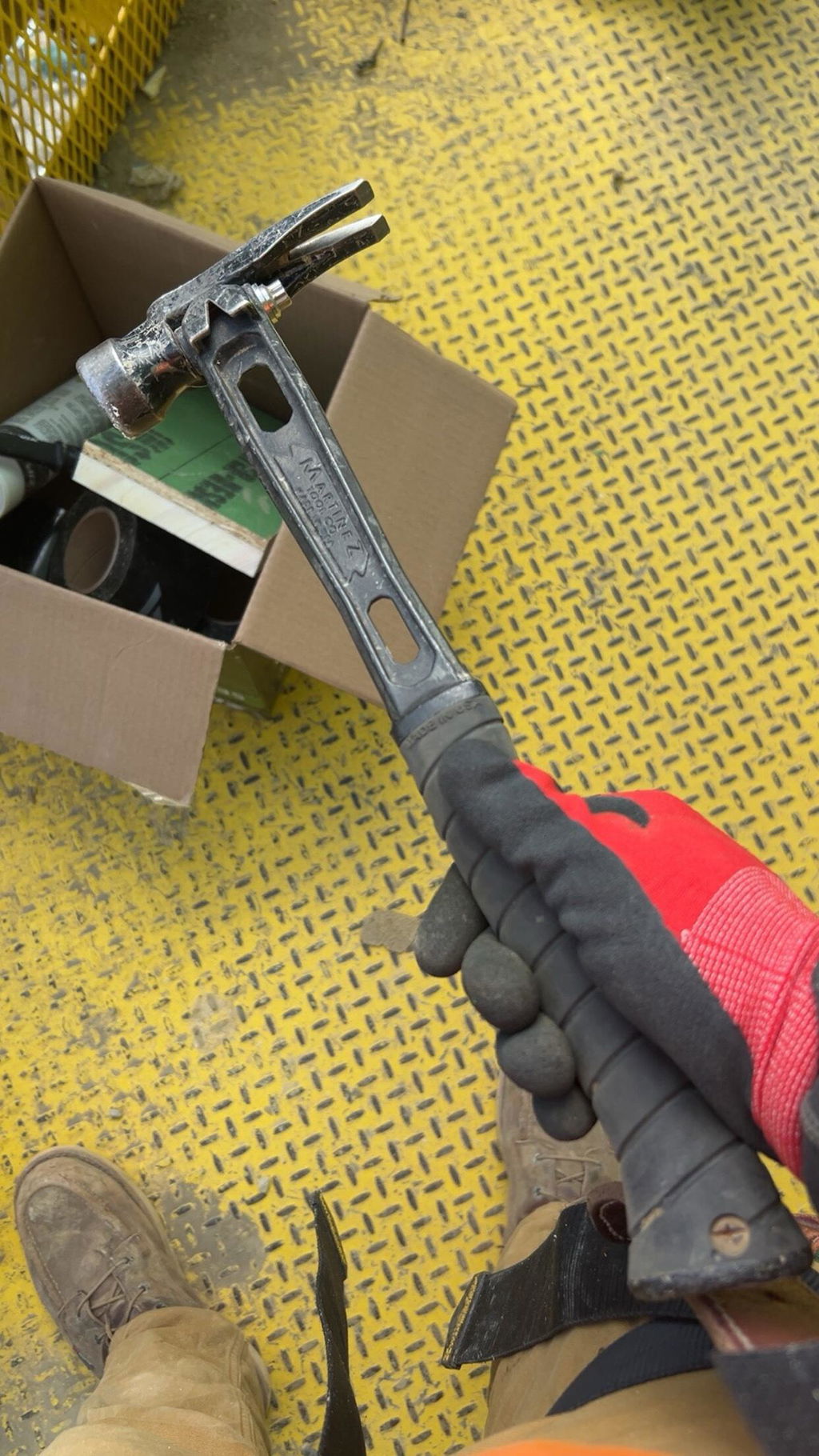
A milled-face framing hammer drives nails clean and holds up under thousands of strikes. Titanium handles can reduce impact shock compared with many steel-handled designs. Hardened steel heads provide impact durability, while milled faces help grip nail heads and reduce slipping during nail driving.
Speed Square
A 7-inch rafter square marks angles, checks cuts, and acts as a saw guide. It needs to stay square after being dropped, kicked, or buried under lumber.
Stair Gauge
The Martinez stair gauge clamps onto framing squares for repeat-angle layout—stairs, rafters, or any angled framing that requires consistent cuts across multiple pieces.
Pry Bar
Titanium pry bars pull nails, separate joints, and adjust framing without adding bulk to a tool belt. Strength-to-weight ratio matters when you're carrying it all day. The Best Titanium Pry Bar collection covers options built specifically for the leverage and weight demands of professional framing work.
Chalk Line
Layout starts with snapped lines. A durable reel and clean chalk keep lines visible without constant reloading.
Tape Measure
A 25-foot tape measure is a common job-site choice for layout and one-person measurements, especially when it has a durable blade and strong standout.
Utility Knife
Scores sheathing, cuts housewrap, and handles a dozen other tasks that don't warrant a saw. A sharp blade that stays sharp matters more than most tradesmen account for until they're on a job without one.
Nail Puller
Separate from a pry bar, designed specifically for pulling nails flush and clean without tearing up the surrounding material. Saves time on corrections and keeps the work surface intact.

What Separates Professional Framing Tools From Consumer Grade
Consumer-grade tools are built to a price point. Professional framing tools are built to a performance standard. The difference shows up fast on a job site.
Materials
Consumer tools use lower-grade steel and plastic components built to reduce manufacturing costs. Professional framing tools use materials selected for performance, titanium handles, steel heads machined to tighter tolerances, and hardware that won't fail under daily loads. The difference shows up in how the tool performs and how long it holds that performance. For tradesmen evaluating what a premium build actually delivers, the Most Expensive Framing Hammer collection shows how material and engineering choices translate into real job-site performance.
Tolerances and Calibration
A consumer square might be close to 90 degrees. A professional square holds exactly 90 degrees, machined to tight tolerances. On a framing job, close isn't good enough. Errors compound across every mark made from an inaccurate reference point.
Balance and Ergonomics
Consumer hammers are designed to look right on a shelf. Professional framing hammers are engineered to swing right in your hand, with weight distribution, handle geometry, and grip position all considered against how the tool gets used across a full shift.
Durability Under Load
Consumer tools are tested for normal use. Professional framing tools are built for abuse, drops, impacts, weather exposure, and daily punishment. Handles that don't crack. Heads that don't loosen. Hardware that holds. That's the baseline for job site grade.
Repairability
A consumer tool that breaks gets replaced. A professional tool gets repaired. Martinez Tools offers replacement heads, handles, and grips across the full hammer lineup. A tool you can maintain is a tool that lasts a career.
Framing Hammer Tools: Why The Right Hammer Changes The Job
A framing hammer isn't interchangeable. Weight, balance, handle material, and face type all affect how the job goes, and the wrong combination costs you output, accuracy, and physical wear over a full shift.
Weight
15oz is the standard for production framing. Heavy enough to drive in fewer strikes. Light enough to swing all day without burning out your arm by noon. A hammer that's too heavy slows your pace. Too light and you're doubling your strike count on every nail. If weight reduction is a priority for your daily work, the Lightweight Framing Hammer collection covers options built to reduce fatigue without sacrificing driving performance.
Handle Material
Titanium handles transfer less vibration than steel, weighs significantly less, and holds up to the daily abuse of a production framing site without degrading over time.
Face Type
Milled face for framing, the texture grips the nail head and reduces glancing blows on overhead and awkward-angle driving. Smooth face for applications where surface marks matter. Using the wrong face for the application slows you down and damages the work. For a broader look at how hammer styles compare across applications, Different Types of Hammers: A Professional's Guide to Every Style breaks down the full range in practical terms.
Balance
A hammer that's front-heavy fights your wrist on every swing. A proper balance between head and handle puts the tool in a natural arc, reduces effort per strike, improves accuracy, and reduces cumulative strain. It's the difference between a hammer you manage and one you just use.
The Martinez M1 15oz Framing Hammer
15oz milled or smooth steel head. 16" titanium handle. Curved or straight grip. Available in pre-configured builds or custom spec through the Martinez hammer configurator. Built in the USA. The specs do the talking, pick it up, and the rest is obvious.

Layout And Measuring Tools That Keep Framing Work Accurate
A frame is only as straight as the layout it's built from. These are the tools that keep everything on line, from the first plate mark to the last rafter cut.
Framing Square
The reference point for wall layout, stair stringers, and rafter cuts. Needs to hold a true 90 degrees under daily use. A square that drifts compounds errors across every mark made from it, walls that won't close, rafters that don't land, stairs that fight you on every tread.
Speed Square
Fast angle reference for repeat cuts and saw guides. The go-to for marking 90s and 45s quickly without setting up a larger tool. Compact enough to stay in your pouch and accurate enough for structural work.
Stair Gauge
Clamps to a framing square to lock in consistent measurements across a full run. The Martinez stair gauge sets repeat angles for rafter layout, repeat-angle framing, and general layout work, not just stairs. Set it once, mark consistently across every member. You can find the full range of options in the Stair Gauges for Framing Squares collection to find the right fit for your layout workflow.
Chalk Line
Snaps long reference lines across plates, subfloor, and sheathing. Essential for wall layout and keeping structure on line across long runs where a square alone won't reach.
Tape Measure
25' minimum. Wide, stiff blade that holds on long pulls without support. Every layout decision starts here; a tape that retracts inconsistently or reads inaccurately makes every measurement a second-guess.
Pencil and Keel
Pencil for finishing and detail marks. Keel for structural lumber where a pencil line disappears in sawdust. Both belong on a framing site. The Martinez keel holder keeps both accessible without digging through a pouch every time you need to mark.
The Best Framing Tools For Tradesmen Who Work Full Days
Full-day framing work exposes every weakness in a tool setup. Here's what holds up.
Martinez M1 15oz Titanium Framing Hammer
15oz milled or smooth steel head. 16" titanium handle. Curved or straight grip. Drives fast, swings clean, and reduces fatigue across a full shift compared to a steel-handled alternative. Available pre-configured or custom-built through the Martinez hammer configurator.
Martinez Framing Square
Precision-machined to a true 90 degrees. Holds calibration through daily job site use. Used for wall layout, rafter cuts, and stair stringers, accurate from the first mark to the last.
Martinez Rapid Square
Fast angle reference for repeat cuts and saw guides. Available in multiple blade configurations and fully customizable through the Martinez square configurator. Compact, accurate, and built to stay that way.
Martinez Stair Gauge
Clamps to a framing square and locks in consistent measurements across a full run. Built for rafter layout, repeat-angle framing, and general layout work, not just stair applications. Set it once, mark consistently.
Martinez Titanium Pry Bar
Built for the leverage of framing work demands. Titanium construction keeps weight down without sacrificing strength. Pulls nails, adjusts members, and separates material cleanly, shift after shift.
Martinez Keel Holder
Keeps the keel and pencil accessible without digging through a pouch. Small detail. A significant time-saver on a production framing site, where every interruption adds up.

Final Thoughts
Professional framing tools aren't optional; they're required for tradesmen who work full days on demanding job sites. The right hammer, layout tools, and pry bars reduce fatigue, improve accuracy, and last through years of heavy use when properly maintained.
Material choice, balance, and construction separate professional-grade framing tools from consumer alternatives. Titanium handles, milled steel heads, and precision machining deliver performance designed for repetitive daily use.
Martinez Tools builds framing tools that earn their place in your belt. No compromises on materials or construction. Built for professionals who expect their tools to work as hard as they do.
Frequently Asked Questions: Framing Tools For Professionals
What's the difference between a framing hammer and a standard claw hammer?
Framing hammers typically use heavier heads, longer handles for leverage, and milled faces to improve nail contact during high-volume work.
How do you choose between hand tools and power tools for framing work?
Hand tools offer control and precision for layout, adjustment, and detail work, while power tools handle repetitive cuts and fastening where speed matters.
How can a stair gauge be used beyond just stair layout?
Stair gauges work for rafter cuts, repeat-angle framing, deck joists, and any task that requires consistent angles across multiple pieces. Clamp once, repeat the cut.
Why is tool balance and weight distribution critical for reducing jobsite fatigue?
Balanced tools may require less force per swing and reduce cumulative strain on joints and muscles over hundreds of daily repetitions,
How should framers maintain and store their tools to maximize durability?
Keep tools dry, clean debris after use, inspect them regularly, and store them away from moisture. Titanium is highly corrosion-resistant, while steel's corrosion resistance depends on alloy, coating, and maintenance.
What should a beginning framer prioritize when building their first tool kit?
Start with a quality framing hammer, a 25-foot tape measure, a speed square, and a stair gauge, core tools that handle many layout and assembly tasks, before adding specialty items.