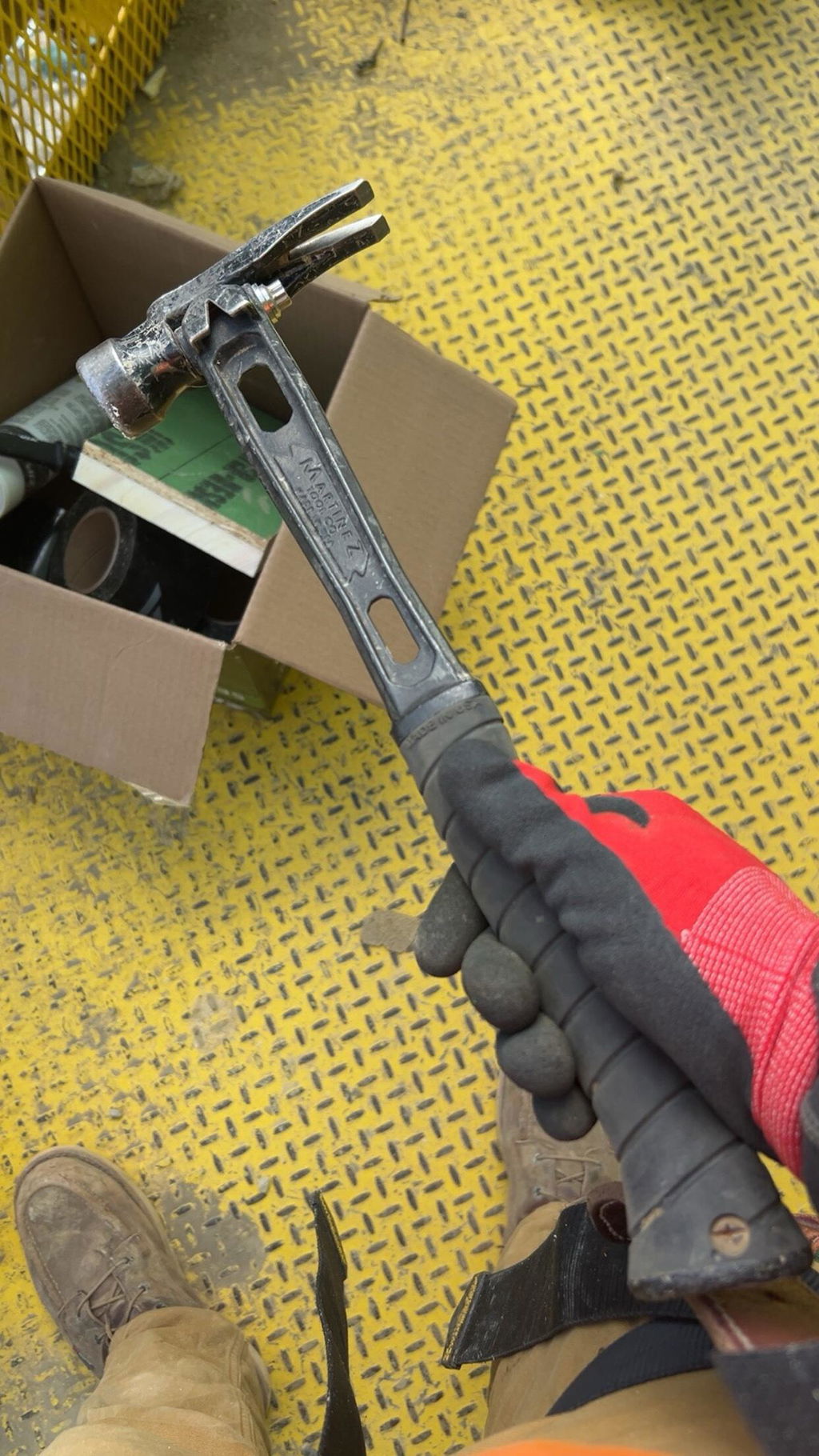
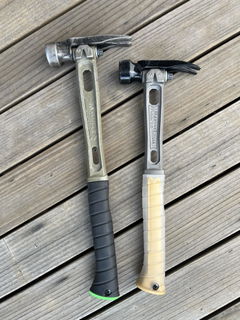
Experienced professionals aren't looking for the cheapest hammer on the shelf. They're looking for the best one money can buy. That's not impulse buying. That's experience talking.
They've Already Bought the Cheap Hammer
Most tradesmen have a graveyard of failed tools — handles that cracked, heads that loosened, grips that wore out after one season. After enough replacements, the math changes. Buying cheap stops looking like savings and starts looking like a cycle that never ends.
They're Thinking About Their Body, Not Just the Job
Hundreds of swings a day add up. A heavy, poorly balanced hammer wears your body down. Tradesmen who've felt that are looking for tools that reduce fatigue without reducing performance.
They Know the Difference Between Price and Value
A tool priced at three or four times the average isn't automatically overpriced — it might be built to a standard the average tool can't match. They're not looking to overspend. They're looking for the best.
They're Done Compromising on Their Primary Tool
A framing hammer is in your hand every single day. Tradesmen who operate at a professional level eventually stop accepting compromise on something central to their work.
They've Heard About Martinez
Word travels on job sites. When a tool performs at a level that stands out, tradesmen talk. Martinez Tools has built that reputation through performance, not advertising.
What Separates A Premium Framing Hammer From A Standard One
Material choice is the first divider. Titanium versus steel changes how a hammer performs across every dimension that matters on a job site.
Material Construction
Titanium's density (approximately 4.5 g/cm³) is about 40–45% lower than that of many steels (approximately 7.8 g/cm³), providing significant weight reduction. Titanium hammers are often marketed as transmitting less vibration and shock than many all-steel hammers, though actual performance depends on the entire hammer design — handle material, grip construction, and geometry — not just the head metal. Standard hammers use steel because it's economical and easy to manufacture.
Manufacturing Precision
High-end framing hammers are machined to tighter tolerances. Head alignment, face angles, and weight distribution are controlled with precision. This consistency translates to predictable performance. Standard manufacturing allows for more variation — two hammers from the same production run may perform differently.
Head geometry, face milling, and precision machining are what separate a premium hammer from a shelf-filler, and these details show up in how the tool performs under sustained daily use. Watch our video on all about Martinez custom hammer heads to understand how our head engineering translates to real job site performance.
Design Engineering
Premium hammers incorporate real-world testing and biomechanical considerations. Handle angles, grip textures, and head geometry are optimized for specific functions. Standard hammers follow basic functional requirements without extensive performance engineering.
The Real Value Behind A High-End Framing Hammer
Price alone doesn't determine value. A tool's worth depends on what it delivers over its working life. The most expensive framing hammers can cost over $300, while quality entry-level hammers often start around $30. The price difference reflects material costs, manufacturing precision, and design engineering that directly impact tool longevity and user performance over thousands of hours of use.
Cost Per Year of Use
A $300 hammer that lasts 10 years runs you $30 a year. A $40 hammer you replace every two years costs you $20 annually — before you factor in lost time, mid-job failures, and the inconsistency of breaking in a new tool every other season. The most expensive framing hammer upfront is often the cheapest one over a career.
Physical Impact Over Time
Reduced shock transmission protects joints and tendons. Less fatigue means fewer injuries. These benefits have real value for tradesmen who plan to work decades, not years.
Efficiency Gains
Better balance and lighter weight mean faster work without sacrificing striking power. Small efficiency gains multiply across thousands of swings per project. A design that increases swing velocity can offset lower head mass to achieve similar delivered energy, though real-world outcomes depend on user biomechanics and tool geometry.
Titanium Framing Hammer Price: What You're Actually Paying For
Titanium framing hammer prices typically range from $200 to over $300, depending on design complexity and manufacturing processes. That premium reflects specific material and engineering costs.
Raw Material Costs
Titanium raw material and processing are typically more expensive than common steels, though the exact differential varies by alloy form, specification, and market conditions. Processing requirements increase costs beyond the raw material price alone.
Machining and Manufacturing
Titanium is harder to machine than steel. It requires specialized tooling, slower machining speeds, and careful heat management. Each component requires more attention and precision. Manufacturing costs reflect this complexity.
Engineering and Testing
Premium hammer design involves biomechanical analysis, material testing, and real-world validation. Engineering time, prototype development, and field testing all contribute to final pricing. This investment ensures the tool performs as designed under actual job site conditions.
American Manufacturing
American manufacturing means tighter tolerances, better quality control, and direct access to support when you need it. For tools built to last careers, that standard pays dividends in reliability and consistency.
The Best Framing Hammer Money Can Buy: What To Look For
Finding the right premium framing hammer starts with understanding which configuration matches your specific work and swing mechanics. Watch our guide on which Martinez hammer is right for me to match the right head weight, handle style, and face to your daily framing demands.
Material and Construction Quality
Look for precision machining with tight tolerances. Check connection points between head and handle. Examine the finish quality and detail work. Premium construction is visible in how components fit together.
Balance and Weight Distribution
Pick up the hammer. The balance point should feel natural. Weight should be distributed to maximize striking efficiency without excessive effort. Poor balance forces you to work harder for the same results.
Intended Use and Daily Demands
Consider your specific framing work. All-day use demands features different from occasional projects. Material choice, weight, and design should match your typical job requirements.
Warranty and Manufacturer Support
Premium tools should include solid warranty coverage. Manufacturer support matters when issues arise or replacement parts are needed. Companies that stand behind their tools demonstrate confidence in their construction quality.
Martinez Tools Builds The Premium Framing Hammer Pros Trust
Every design decision, every material choice, and every manufacturing standard exists to justify the investment professionals make when they choose a Martinez hammer.
Titanium Handle, Steel Head — Built For The Job
Martinez framing hammers use a titanium handle paired with a hardened steel head. The titanium handle reduces total tool weight without sacrificing the steel head's driving strength. Less fatigue over a full shift. No compromise on power.
Precision Balance That Performs All Day
Every Martinez hammer is engineered so the weight distribution between head and handle works with your swing, not against it. Accurate and consistent from the first strike of the morning to the last one of the day.
American Craftsmanship Built to a Professional Standard
Martinez tools are made in the USA. Tighter tolerances, better quality control, and a finished product built to a standard that professional tradesmen can rely on. Learn more about our workmanship and materials and how that standard shows up in every hammer we build.
Built to Last a Career, Not a Season
Cheap hammers are designed for a price point. Martinez hammers are designed to a performance standard — and that standard doesn't include planned obsolescence. These are tools built to be used hard, relied on daily, and kept. A Martinez framing hammer isn't something you replace. It's something you keep.
A Lineup Built for Professional Customization
Martinez Tools offers a full custom hammer configurator. Choose your head weight, handle style, grip, and finish. For tradesmen who want a premium framing hammer that performs at the highest level and carries a finish that reflects their standard of work, browse our polished hammers collection to find a build that earns its place in your belt.
A Brand With 30+ Years Behind It
Martinez Tools was built by a professional who spent 30+ years making and swinging hammers. That foundation shows in every design decision.
Shop The Martinez High-End Framing Hammer
Choose from a lineup of pre-configured, ready-to-ship framing hammers built to professional specs, or use the Martinez Hammer Configurator to build exactly what you want. Head weight, handle style, grip, and finish — all yours to choose.
Ordering direct from Martinez Tools cuts out the middleman. Free shipping on every order within the United States, with 3–5 business day processing. Browse our best selling hammers to see which configurations professional framers rely on most.


![[SKU][MZ4111][2]](//martineztools.com/cdn/shop/files/MZ4111-M1-Titanium-Handle-15oz-Smooth-Steel-Head-Straight-Grip-Framing-Hammer.jpg?v=1759949356&width=500)


![[SKU][MZ4111][2]](http://martineztools.com/cdn/shop/files/MZ4111-M1-Titanium-Handle-15oz-Smooth-Steel-Head-Straight-Grip-Framing-Hammer.jpg?v=1759949356&width=500)