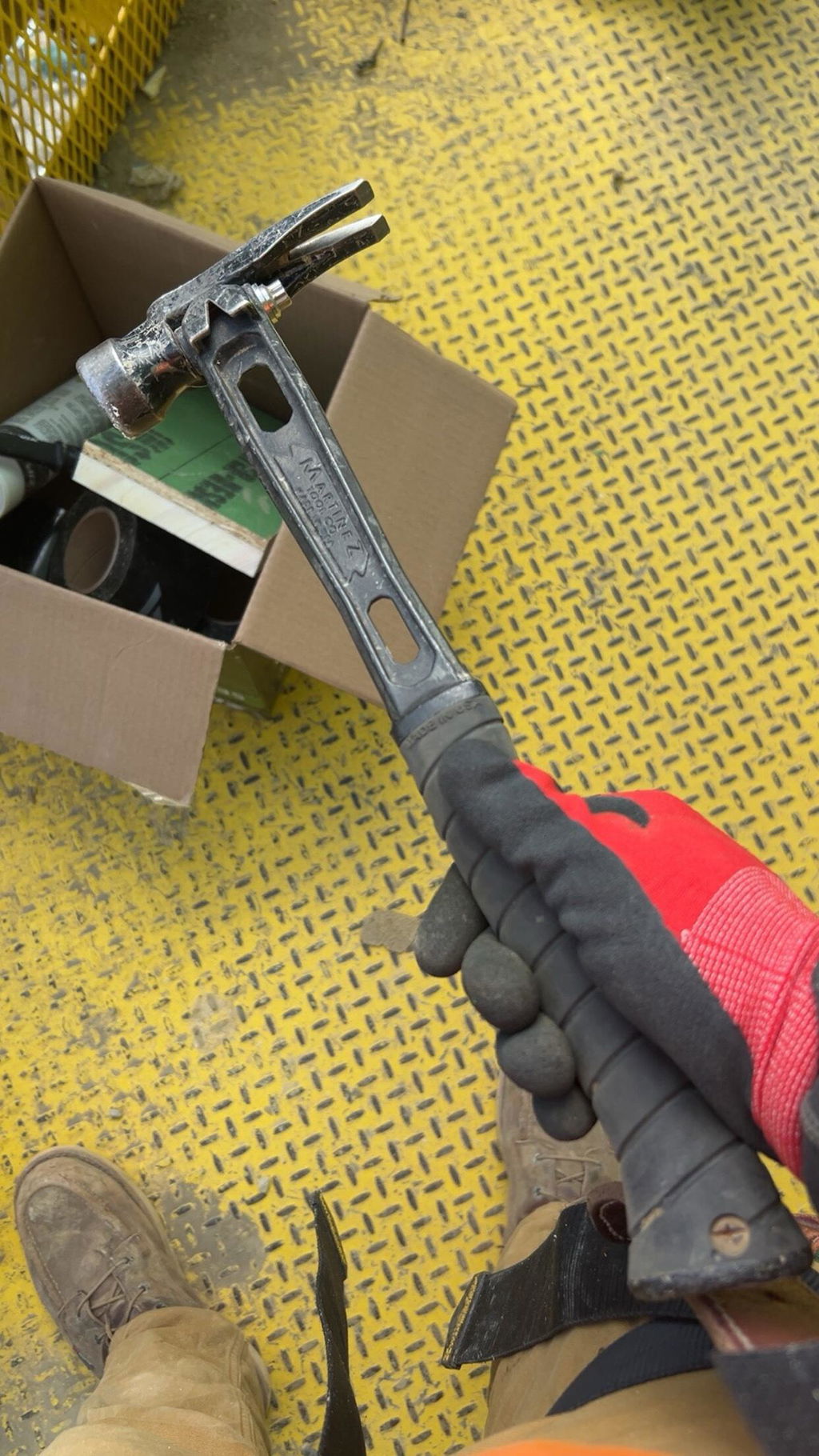
Key Takeaways:
- Weight Matters Over Distance: Titanium handles can reduce fatigue during long framing runs by cutting swing weight without sacrificing steel head mass for driving power.
- Steel Still Drives The Nail: Milled steel heads deliver the mass needed for clean strikes; titanium often replaces the handle, not the working end.
- The Switch Shows Up In Hours, Not Swings: Reduced arm strain may become noticeable after a full day rather than after a few nails.
Steel hammers built the trades. For decades, there was nothing else, heavy, durable, and proven across millions of job sites. Then titanium entered the picture, and the conversation changed. Lighter swing. Less vibration. More output across a full shift. But the question tradesmen actually ask isn't which material sounds better on paper. It's which one performs better in your hand, on your job, every day.
At Martinez Tools, we build titanium-handled framing hammers because the material addresses a specific challenge: reducing the cumulative strain of repetitive swinging while maintaining the steel mass needed to drive 16d nails clean. Martinez Tools machines every hammer to maintain balance and durability under job-site conditions, where lighter tools can sometimes fail.
This piece covers what actually separates titanium from steel in framing hammers, where performance differences may appear, and how to decide which material fits your work.
Titanium vs. Steel Hammer: What The Comparison Actually Comes Down To
The titanium vs steel hammer comparison isn't about replacing steel entirely. It's about where each material works best in the tool.
Handle Material Drives The Weight Difference
Steel heads deliver driving force. Titanium handles reduce dead weight between your hand and the striking surface. Many titanium framing hammers are sold in 14–16 oz classes, while solid-steel framing hammers are commonly sold in 20–30 oz head-weight classes, though exact total tool weight varies by model. For a broader look at how hammer styles and specs compare across applications, Different Types of Hammers: A Professional's Guide to Every Style covers the full range in practical terms.
Shock Absorption May Reduce Arm Fatigue
Titanium handles are designed to reduce perceived shock and fatigue compared with many steel-handle designs by reducing tool mass and altering vibration transmission. Over hundreds of swings, reduced shock load may add up to less soreness and better control late in the day.
Durability Under Missed Strikes
Titanium handles can offer high strength-to-weight performance and may better tolerate certain side loads than wood or fiberglass handles, though impact survival depends on hammer design and use conditions. Wood splits, fiberglass fractures, and steel handles generally transmit more vibration than handles designed with damping materials or shock-absorbing construction.

Steel vs. Titanium Hammer Weight: What Does The Difference Mean On The Job
Weight matters most when you're swinging the same tool for eight hours straight.
Titanium Handles Cut Weight Without Losing Head Mass
Titanium-handled framing hammers are often substantially lighter than traditional full-steel framing hammers while maintaining steel head weight for consistent driving. You're moving less mass per swing, but the head weight stays consistent for clean nail setting.
Less Weight May Mean Faster Recovery Between Swings
Lighter tools can allow faster repositioning. You're not fighting as much momentum to line up the next nail. That speed may add up over long walls and repetitive work.
The Difference May Show Up In Your Shoulder, Not Your Hand
Fatigue reduction isn't primarily about grip strength. It's about cumulative weight lifted and accelerated through space repeatedly all day. Cutting several ounces can change the cumulative load on your rotator cuff and forearm. The Lightweight Framing Hammer collection covers options built around that same principle of reducing swing weight without giving up driving performance.
Titanium Hammer Benefits That May Appear On A Full Day Of Framing Work
Titanium handles deliver specific advantages that often matter most under sustained use.
Reduced Fatigue After Several Hours
Some framers report noticing the difference when they're halfway through a long run, the arm isn't fighting the tool as much, strikes stay accurate, and control doesn't drop off as quickly
Vibration Dampening On Every Strike
Titanium handles are designed to reduce transmitted shock compared with many steel-handle designs. Less wrist punishment may translate to reduced soreness at the end of the week, not just the end of the day.
Durability That May Survive Missed Hits and Side Loads
Titanium offers better resistance to certain impacts without cracking compared with wood or fiberglass, though all materials have limits.
Where Steel Hammers Still Hold Ground And Where They Fall Short
Steel-handled hammers have their place, but they come with trade-offs.
Steel Handles Are Highly Durable
One-piece forged steel hammers are highly durable and less vulnerable to handle separation or cracking than wood or fiberglass handles. If durability is the primary concern, steel handles perform well.
But They Transmit More Shock Into Your Arm
Steel handles generally transmit more vibration than handles designed with damping materials or shock-absorbing construction. Over time, that can add up to soreness, strain, and reduced accuracy.
The Extra Weight Works Against You On Long Jobs
Steel-handled hammers typically weigh more than titanium-handled versions. That difference doesn't sound like much until you've swung the tool over a thousand times in a day.

Titanium Framing Hammer Review: What Some Pros Say After Making The Switch
Framers who switch to titanium handles sometimes report a common pattern.
Less Soreness, Same Driving Power
Anecdotal trade-user reports suggest some users perceive less arm fatigue at day's end while nails still sink clean. The steel head does the work, the titanium handle may reduce the toll on your body.
Faster Work Without Trying Harder
Some framers report finishing walls faster after switching. The tool doesn't slow them down. Lighter weight may mean faster resets between strikes.
Tools That Last Years, Not Months
Titanium-handled hammers from Martinez Tools are built to hold up through thousands of swings without cracking, bending, or losing balance. They don't need to be replaced after a season.
Best Framing Hammer Material: How To Make The Right Call For Your Work
The material decision comes down to how you work, how long you work, and what you expect from a tool you use every day. Here's how to make the call.
If You're Framing Full Days, Five Days a Week
Titanium. The weight and vibration reduction over a steel handle adds up significantly across a production framing schedule. Less cumulative strain means better output in the back half of every shift, and less wear on your body over a season. You can browse the full range of options in the Best Titanium Hammer collection to find a build that fits your framing schedule and daily output demands.
If You're on a Tight Budget and Replacing Tools Regularly
A quality steel hammer still outperforms a cheap titanium one. If the budget doesn't support a premium titanium build, a well-balanced steel hammer with a solid handle is a better call than a low-grade titanium option built to a price point.
If You Do Mixed Work — Framing and Finish
Two hammers. An M1 titanium handle with a 15oz head for structural work. An M4 titanium handle with a 12oz finish head for detail applications. The material is the same, the spec changes with the work. If you want to dial in the exact configuration for your workflow, the Custom Framing Hammer collection lets you spec head, handle, and grip to match the work you actually do.
If Longevity Is the Priority
Titanium outlasts wood and fiberglass under daily job-site abuse. Wood cracks. Fiberglass adds bulk without meaningful durability gain. A titanium handle built to professional standards holds its performance across years of hard use without degrading.
The Bottom Line
For professional framers working full schedules in demanding conditions, titanium wins on every metric that matters over time, weight, vibration, durability, and output. Steel made sense when titanium wasn't available. For tradesmen who can invest in the right tool, the comparison isn't close.
Why Martinez Tool Co. Builds Titanium Framing Hammers For Professional Framers
We machine titanium-handled framing hammers because the material addresses real challenges for framers who work full days.
Precision-Milled Steel Heads That Drive Clean
Every Martinez hammer uses a milled steel head designed for balance and accurate striking. Titanium handles the shock absorption. Steel handles the driving.
Titanium Handles Built to Reduce Shock and Last
We use titanium for the handle because it cuts weight, is designed to dampen vibration, and may survive hard use without cracking. It's a strong material choice for reducing fatigue without compromising durability.
American Craftsmanship That Holds Up Under Job Site Conditions
Martinez Tools are machined in the USA and built for professionals who rely on their tools daily. We don't cut corners. Every hammer is designed to last through years of heavy use. For tradesmen evaluating what a premium build actually looks like, the Most Expensive Framing Hammer collection reflects the material and engineering standard Martinez holds across every build.

Final Thoughts
The titanium vs steel hammer question comes down to how often you swing and how much cumulative strain you're willing to tolerate. Titanium handles may reduce fatigue, are designed to absorb shock, and maintain durability while preserving the steel head mass needed for clean strikes. Steel handles are highly durable but generally transmit more vibration and weigh more overall.
For framers working full days, titanium may deliver measurable performance advantages in reduced soreness and sustained accuracy. Martinez Tools builds titanium-handled framing hammers because the material fits the demands of professional framing work.
Frequently Asked Questions: Titanium vs. Steel Hammers
How much does titanium really reduce fatigue over an 8-hour day on the job?
Titanium handles may reduce cumulative arm strain by cutting tool weight and altering shock transmission per strike, which some users report translates to less soreness and better control after several hours of repetitive swinging.
Will a titanium handle hammer survive a hard miss on a concrete beam?
Titanium handles can offer high strength-to-weight performance and may better tolerate certain side loads than wood or fiberglass handles, but impact survival depends on hammer design and use conditions.
Why does a milled steel head hold up better than alternatives over thousands of swings?
A milled steel face can provide precise striking texture and consistent geometry, though durability depends on material quality, heat treatment, and design.
Can you sharpen a steel hammer head when it gets worn, or do you replace it?
You can grind down burrs or reshape the striking face on a milled steel head, but excessive wear usually means it's time to replace the hammer.
Does a titanium handle affect your grip or control when your hands are wet or dirty?
Titanium handles paired with textured grips maintain control in wet or dirty conditions, as well as any other handle material; grip design matters more than the core material.
What happens to a titanium handle in freezing temperatures or extreme job site conditions?
Within normal construction jobsite temperature ranges, titanium handles should retain structural integrity well and are less susceptible to moisture-related swelling or cracking than wood, though titanium still undergoes thermal expansion.