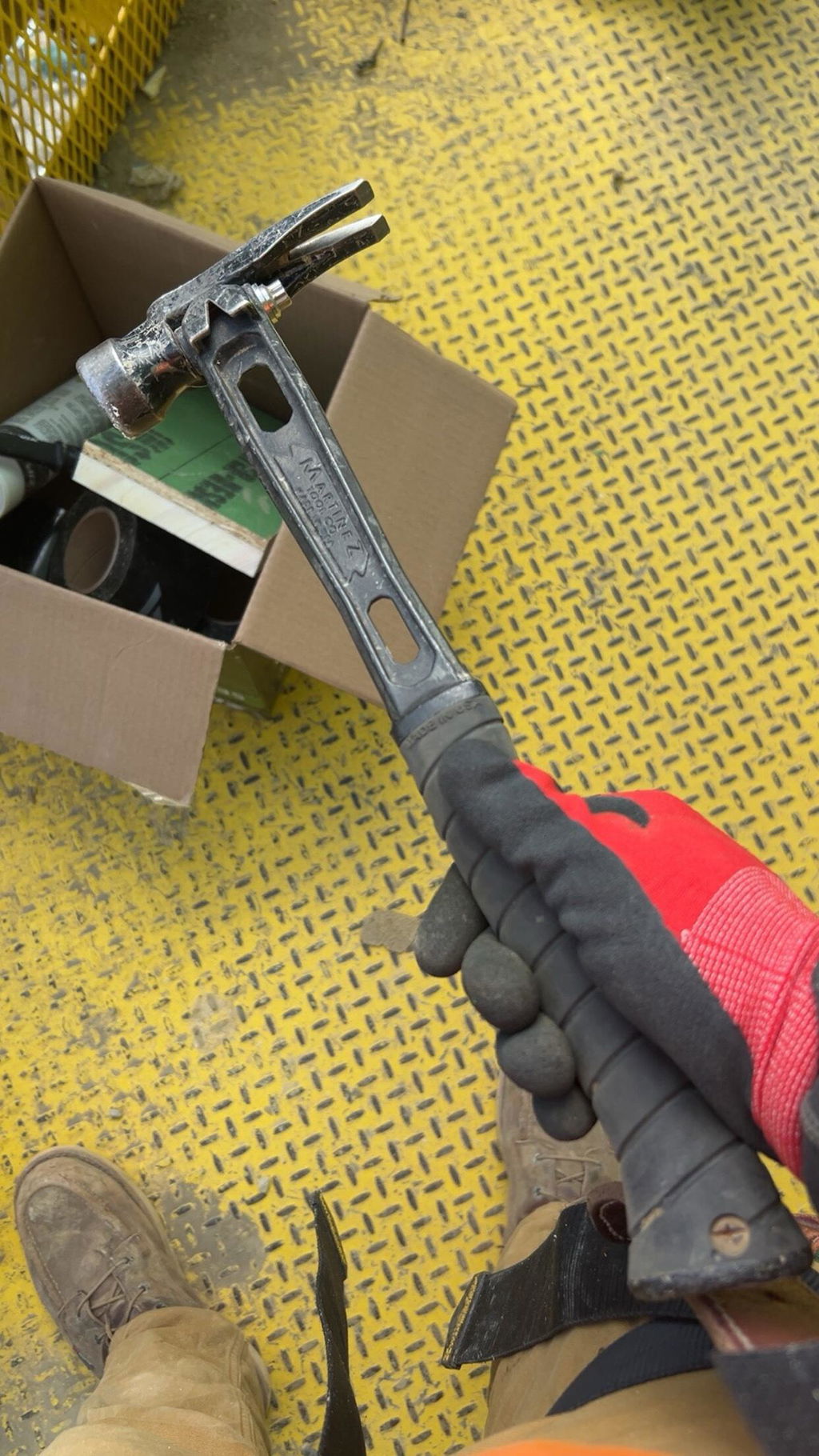
Key Takeaways:
- Weight Matches Task: Head weight should fit the job—light for demo detail, heavy for breaking mass, never oversized "just in case."
- Speed Over Bulk: A hammer too heavy to swing fast delivers less real force than a lighter one you can drive at full speed.
- Handle Length Multiplies Force: Longer handles add leverage and swing speed; head weight and handle length work as a system, not separately.
Too light and you're doubling your swing count on every strike. Too heavy and you're burning out before the job is done. Sledge hammer sizing isn't complicated, but getting it wrong costs you output, energy, and time on work that doesn't slow down for a tired tradesman.
At Martinez Tools, we build hand tools for framers, finish carpenters, and contractors who swing for a living. We know when a framing hammer is no longer enough, and a heavier tool takes over.
In this piece, we'll cover what sledge hammer numbers mean, how to choose sledge hammer weight for the job, and where our hammers fit.
Sledge Hammer Sizes Explained: What The Numbers Actually Mean
The number on a sledge hammer is head weight. Full-size sledges use pounds. Smaller clubs and drilling hammers may use pounds or ounces, depending on the tool type and manufacturer. That single spec drives how much force the tool delivers and how long you can swing it.
Pounds vs. Ounces
A 10 lb sledge and a 32 oz hammer serve two distinctly separate utilities. Sledges start where framing and club hammers stop. When you see ounces, you're looking at a hammer built for driving and lighter demo. When you see pounds in the double digits, you're looking at a tool built to break.
Head Weight vs. Total Weight
The listed weight is for the head, not the whole tool. A 12 lb sledge with a 36 inch handle weighs more than 12 lb in your hands. The head does the work, but the handle adds mass and length that change how the swing feels. Two hammers with identical heads swing differently on different handles.

How To Choose Sledge Hammer Weight For Your Application
Match the head weight to what you're breaking and how long you'll be at it. Choose the sledge you can swing accurately through the whole task, not just the heaviest one available.
If you're still getting familiar with the full range of striking tools available, Hammer Types Explained is a good place to start before narrowing down to sledge weight.
Start With the Material
A soft or thin material requires less mass. Tile, brick, and stakes move under a 2–4 lb head. Concrete, masonry, and structural work need 8 lb or more. Break the job down by what's actually in front of you.
Factor In Swing Volume
A 20 lb sledge is the right call for a single foundation strike. Over a full day of repeat swings, that same weight burns you out, and your accuracy drops. Pick the lightest head that still moves the material in a reasonable number of hits. A heavier hammer can deliver more energy only if swing speed is maintained; if added mass substantially reduces velocity, delivered energy may drop. Fatigue costs more time than an extra swing.
Inspect Before You Swing
Before any job, check the handle. Inspect sledge hammer handles before use; cracked, splintered, or loose handles are unsafe and should be repaired or replaced. Be sure to keep wooden handles kept free of splinters or cracks and tight in the tool.
Sledge Hammer Weight Guide: Light, Medium, And Heavy Compared
Sledges fall into three working ranges. Stay in the right range and you'll have no issues working efficiently and accurately.
Light: 2–4 lb
Light sledges and club hammers handle detail demolition and driving. Use them for tile, brick, cold chisels, masonry nails, and stakes. One hand or two, they let you place hits precisely in tight spots where a big sledge won't fit or would overshoot.
Medium: 6–10 lb
Medium sledges are the everyday demo range. They break concrete slabs, knock out framing, and drive posts. Enough mass to move real material, light enough to swing repeatedly without wrecking your shoulders by lunch.
Heavy: 12–20 lb
Heavy sledges exist to break mass. Foundations, thick concrete, and stubborn structural material. You won't swing these fast or long, but each hit lands with force nothing lighter can match. Two-handed only, controlled swings, short sessions.
For a deeper look at how different hammer types stack up across the weight spectrum, A Professional's Guide to Different Types of Hammers breaks it down by application and trade.
Best Sledge Hammer Size For Demo And Structural Work
Martinez builds two sledge head sizes, the M79 and the M80, each designed for specific force requirements on demo and structural work. Here's what each one delivers.
M79 — 29oz Sledge Head
The M79 runs at 29oz, heavier than a standard framing head, lighter than a full demolition sledge. Built for structural applications where a 15oz framing head doesn't have enough mass behind the strike. Available as a standalone head or as the M79-29oz Signature Series build. Learn more about the full setup via the M79 Sledge Head on M1 Framing Handle spec sheet.
M80 — 36oz Sledge Head
The M80 runs at 36oz, full demolition weight. Smooth face, built for maximum impact on heavy structural demo, stake driving, and applications where raw force is the only thing that moves the material. Available in standard, red, and blue anodized finishes as a standalone head.
Assembled Sledge Hammer Builds
For tradesmen who want a complete build, Martinez offers the 36oz smooth face sledge head in several assembled configurations, the Murdered-Out, and the Victory Special Edition in Blackout, Polished Patriot, and Polished Easy Money. All run the same 36oz smooth face head on the M1 titanium handle.

How Handle Length And Head Weight Work Together
Head weight and handle length work as one system. A longer handle adds swing arc and leverage, multiplying the force a given head delivers. The two specs decide the real impact together.
Leverage and Speed
A 36" handle drives more speed at the head than a 16" handle with the same weight. More speed means more energy on contact. Longer handles can increase swing arc and head speed when there is enough room and control. That's the real reason full-size sledges run long in the handle; the length does part of the work your arms would otherwise be forced to do.
Control and Fit
Longer isn't always better. In a tight demo, a shorter handle gives control that a long one can't. Match handle length to swing room and the force you need. A short-handled club hammer in a stairwell beats a 36" sledge you can't fully swing.
When A Standard Framing Hammer Isn't Enough For The Job
A framing hammer drives nails and handles light demo. When you're breaking concrete, moving posts, or knocking out masonry, you've outgrown it and need sledge-level mass.
Where the Framing Hammer Stops
A 20–25 oz framing hammer swings fast and sets nails all day. But its head is built for driving, not breaking mass. Ask it to demo a slab, and you'll bounce off with nothing to show. That's the line where a heavier tool takes over.
If you're weighing handle material as part of that decision, Titanium vs Steel Hammer: Which Wins for Framers covers the tradeoffs in detail.
Bridging the Gap
Not every job jumps straight to a 20 lb sledge. Plenty of demo sits between framing and full sledge work: knockouts, blocking, stubborn nails, light masonry. A heavier hammer with real striking mass covers that middle ground without hauling a full-size sledge.
When the conversation comes down to 20 lb vs 36 oz sledge, the answer usually depends on swing volume and material density. A 20 lb is built for raw breaking power, while a 36 oz gives you repeatable force with far less fatigue over a full day.

Final Thoughts
Sledge hammer sizes come down to one rule: match the head weight to the material and the swing volume. Light for detail demo, medium for everyday breaking, heavy for foundations and mass. Factor in handle length, because leverage and speed turn head weight into real force. Pick the lightest tool that gets the job done, then swing it fast and accurately. Martinez Tools builds hammers for tradesmen who work that way.
Frequently Asked Questions About Sledge Hammer Sizes: How To Choose The Right Weight For The Job
What is a good weight for a sledge hammer?
For general use, 8–10 lb hits the sweet spot, enough mass to break concrete and drive posts without burning you out over repeat swings.
What is the difference between a 20 lb and a 36 oz sledge hammer?
The 20 lb is a full-size demo sledge for breaking mass; the 36 oz (2.25 lb) is a heavy framing hammer for driving and light demo, about nine times lighter.
Does a heavier sledge hammer always hit harder?
No, only if you can still swing it at full speed. Because kinetic energy scales with the square of velocity, past your strength limit, added weight slows the swing and delivers less total energy.
What weight sledge hammer should I use for interior demo like drywall and tile?
A 2–4 lb hammer. Light heads give control in tight spaces and protect the framing you want to keep.
What size sledge hammer do I need to break concrete or foundations?
Start at 8–12 lb for slabs; step up to 16–20 lb for thick or reinforced concrete and foundations.
How does handle length affect a sledge hammer's performance and safety?
Longer handles increase leverage and swing speed for greater force, while shorter handles offer better control in tight spaces. Match the length to the swing room to stay accurate and safe. Always inspect handles for cracks or splinters before use.