Key Takeaways:
- Different Tools, Different Jobs: A cat's paw digs out sunken nails from framing; a nail puller cleanly extracts exposed heads.
- Titanium Wins on Daily Use: A titanium nail puller weighs less than steel, so it swings lighter across a full shift.
- Match Tool to Task: Rough framing calls for a cat's paw; trim-and-finish work calls for a controlled nail puller.
Both tools pull nails. After that, they do different jobs. A cat's paw sets into the wood to get under a nail head; it's useful, but it marks whatever it touches. A dedicated nail puller seats under the head and extracts cleanly. Using the wrong one for the application costs you either the surface or the time it takes to repair it.
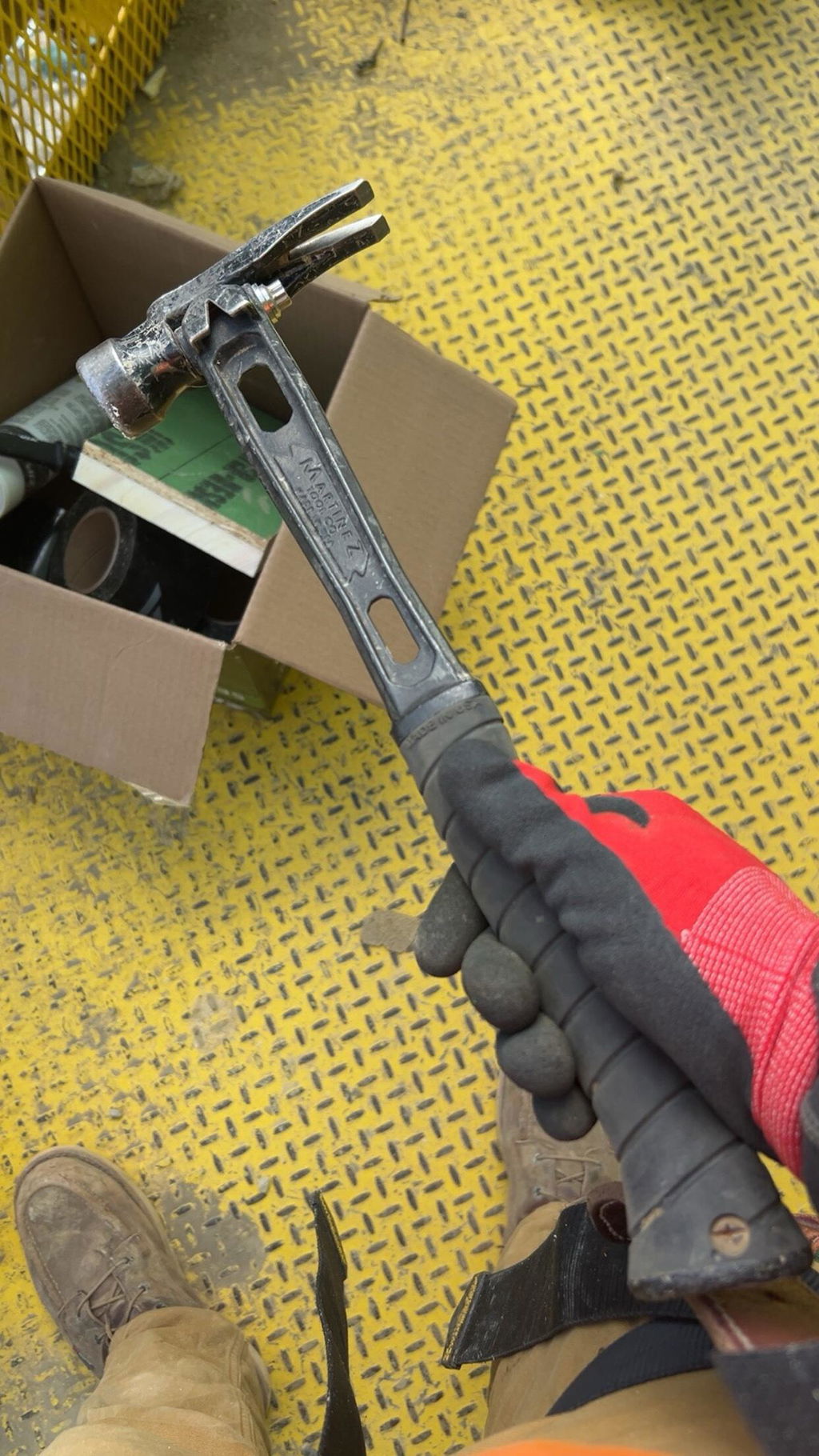
At Martinez Tools, we build titanium nail pullers for tradesmen who pull nails every day, framing corrections, finish extraction, and everything in between. American-made and built for clean, fast extraction on the applications that matter.
In this piece, we'll cover the differences between a cat's paw and a nail puller, how to use a cat's paw, and how to choose the right nail puller for framing and remodeling work.
Nail Puller vs. Cat's Paw: Key Differences And Design Features
A cat's paw is actually one type of nail puller, so here we compare it against cleaner, standard, or plier-style pullers. The difference is in how they grab and where they work.
If you're building out your toolkit, our Carpentry Tools List: 25 Must-Have Tools covers the essential tools every tradesman should have on hand.
Design and Grip
A cat's paw has a sharp, curved claw at the end of a shaft. You drive that claw into the wood beneath a sunken nail head, then lever back. A standard nail puller uses jaws or a notched claw to clamp the nail head or shank and pull it straight.
Where Each Works Best
The cat's paw is a rough-work tool. It sacrifices surrounding wood to reach nails buried below the surface. Many standard or plier-style nail pullers work cleaner on exposed nails than a cat's paw; they grab exposed heads with less gouging, which matters on trim and finish surfaces.
Force and Leverage
A cat's paw uses a short, aggressive arc for fast tear-out. A nail puller trades speed for control and cleaner extraction on visible work.

How To Use A Cat's Paw To Dig Out Embedded Framing Nails
Use a cat's paw when the nail head sits below the wood surface and there's nothing to grab. For a deeper look at the tools built around this kind of work, see our guide to Framing Tools for Professionals.
Setting the Claw
Position the claw tips against the wood, angled toward the nail head. Strike the back of the head with a hammer to drive the claw under the nail. Keep the claw straddling the shank, not off to one side.
Levering It Out
Once the claw is seated under the head, roll the tool back on its curve. The arc pulls the nail up as you lever. Reset and repeat if the nail is long or bent.
Controlling the Damage
Drive the claw at a shallow angle to limit gouging. On framing, some tear-out is expected and acceptable; the goal is speed, not a clean face.
When To Use A Standard Nail Puller vs. A Cat's Paw Nail Puller
The right choice comes down to nail position and how much the surface matters.
Reach for a Cat's Paw
Use a cat's paw when the head is sunk, painted over, or driven flush, and there's no way to grip it. Framing, subfloor, and demolition are its territory.
Reach for a Nail Puller
Use a nail puller when the head is exposed or slightly proud, and you want a straight, controlled pull. It's the call for trim, cabinets, and any surface you plan to keep.
The Overlap
Many remodel jobs need both. Carry the cat's paw for tear-out and the nail puller for salvage and finish extraction.

Selecting The Best Nail Puller For Framers And Remodelers
Framers and remodelers pull nails constantly, so the tool has to hold up and stay comfortable through the day.
Match the Tool to the Work
Framers doing a tear-out want an aggressive cat's paw that bites fast. Remodelers salvaging trim want a nail puller that pulls clean. Most pros carry both.
When selecting your full nail-pulling setup, it also helps to know your hammers — Hammer Types Explained is a good starting point for making sure you're driving and setting nails with the right tool before you ever need to pull them.
Weight and Balance
Tool weight affects fatigue more than spec sheets show (Canadian Centre for Occupational Health and Safety, n.d.). A lighter tool with comparable pulling force cuts fatigue across hundreds of pulls. Titanium separates itself from standard steel on weight alone.
Edge and Durability
Look for a hardened, well-shaped claw that holds its edge. A dull or soft claw slips off nail heads and slows you down.
Why A Titanium Nail Puller Outperforms Standard Options Under Daily Use
Titanium cuts the weight on a tool you swing and lever all day.
Less Weight, Same Bite
Titanium offers a high strength-to-weight ratio and is roughly 40–45% lighter than steel by volume. You get a strong claw force with less strain on your wrist and forearm across a full shift.
Less Fatigue, Less Rebound
Lighter swings mean fewer tired misses late in the day, since repetitive forceful hand-tool use and tool design affect fatigue. Because titanium differs from steel in density and stiffness, titanium tools can feel different on impact; any claim of reduced shock or sting is best supported by product testing.
Built to Stay
Titanium resists corrosion better than bare steel due to its stable passive oxide film, so a titanium nail puller holds up in wet and outdoor jobsite conditions for years. It's a tool you keep, not one you replace.
How Martinez Tool Co. Builds Nail Pullers For Professional Tradesmen
Martinez builds two titanium nail pullers, one for framing, one for finishing. Each one is spec'd for its application, not built as a one-size compromise.
And because every pull starts with a drive, knowing your options from A Professional's Guide to Different Types of Hammers helps you build a complete fastening and extraction system that works together from the first swing to the final pull.
Titanium Construction Across the Full Lineup
Every Martinez nail puller is titanium. Lighter than steel at the same length, resistant to corrosion, and built to hold its shape under the daily load of production nail pulling without bending or degrading over time.
Claw Geometry Built for the Application
The 12" framing nail puller has the claw geometry and leverage profile for high-volume framing nail extraction, seats fast, grips solid, pulls clean on 16d and larger fasteners without slipping under load.
The 9" finish nail puller has a tighter claw profile built for controlled extraction on visible surfaces, seats without damaging surrounding material, and pulls without tearing up what stays behind.
Length Matched to Leverage Requirements
12" for framing, the extra length delivers the leverage framing nails require without excessive force on every pull. 9" for finish, shorter, more controlled, built for applications where the extraction needs to be precise rather than powerful.
American-Made to a Professional Standard
Every Martinez nail puller is built in the USA to consistent manufacturing tolerances. The claw seats the same way on pull one as it does on pull one hundred. That consistency is what separates a professional nail-pulling tool from one that fights you every time.

Final Thoughts
A cat's paw and a nail puller aren't interchangeable; they're partners. Drive the cat's paw into framing to dig out buried nails, and reach for the nail puller for a clean pull on trim or salvage work. For pros pulling nails all day, a titanium cat's paw nail puller cuts fatigue and offers strong corrosion resistance compared to standard steel. Match the tool to the task, and carry ones built to keep working as hard as you do.
Frequently Asked Questions About Cat's Paw vs. Nail Puller: Which Tool For Which Job
What is the best nail puller for framers?
For framers, a titanium cat's paw is a strong pick; it drives sunken nails quickly and can reduce hand fatigue over a full day of tear-out.
How do you use a cat's paw without damaging the wood?
Drive the claw at a shallow angle to limit gouging, though on framing, some tear-out is unavoidable and acceptable.
Can a cat's paw be used for finish work and trim?
A cat's paw is not recommended for finishing work or trimming you plan to preserve, because it usually damages the surrounding surface. Use a nail puller for finishing and trimming work instead.
Which tool is better for demolition and deck removal?
A cat's paw is better; it drives under sunken and flush nails fast, which is exactly what demolition and deck tear-out demand.
How do I keep my cat's paw and nail puller from rusting?
Wipe tools down after use, keep them dry, and store them out of standing water; titanium tools resist corrosion better than bare steel.
Can you sharpen the claw edge of a cat's paw?
Yes, if the manufacturer permits it, use a light touch with a file to restore the claw's bite, and avoid removing too much material or overheating the claw.