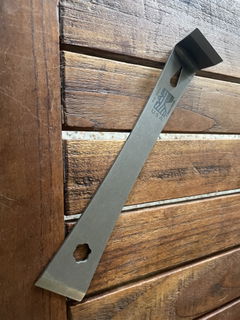
A wrecking bar is built for leverage and force. It tears out nailed framing, pries up flooring, and separates materials that won't come apart by hand. For tradesmen building out a complete job-site setup, the Carpentry Tools List: 25 Must-Have Tools for Every Skill Level covers the full range of tools worth having on site.
Demolition and Tear-Out
Framers and remodelers use wrecking bars to remove old walls, subfloor, and decking. The flat chisel end slides under materials, and the length provides the leverage needed to pull fasteners or rip sections free.
Pulling Fasteners and Adjusting Framing
When a joist or stud is misaligned, a wrecking bar lets you shift it without tearing up the surrounding work. The nail slot helps pull fasteners with more control, though some wood damage may occur depending on technique and fastener type.
Heavy Prying Work
Any job that requires serious leverage — moving heavy beams, pulling apart casing, or separating nailed assemblies — calls for a wrecking bar. It's not a finishing tool. It's for when brute force needs to be applied efficiently.
Wrecking Bar vs. Pry Bar: When Each One Is The Right Call
Both tools pry. Both tools pull. But they're not interchangeable.
When to Use a Wrecking Bar
Wrecking bars are typically longer and built for demo. If you're tearing out walls, ripping up flooring, or pulling apart nailed assemblies, the wrecking bar is the right tool. The added length gives you leverage. The weight gives you impact.
When to Use a Pry Bar
Pry bars are generally shorter and designed for precision work. Use one for pulling trim, adjusting cabinets, or removing molding. It fits into tighter spaces and gives you more control when finesse matters.
The Real Difference
Wrecking bars are for force. Pry bars are for control. Know which one the job calls for, and you'll work faster. For a broader look at how professional hand tools compare across trade applications, A Professional's Guide to Different Types of Hammers covers the full range in practical terms.
What To Look For In A Professional Wrecking Bar
Not all wrecking bars are built the same. Here's what matters.
Material and Weight
Steel is common, but it's heavy. Titanium cuts weight by nearly half while maintaining a strong strength-to-weight ratio. Over the course of a demo job, that difference adds up.
Length and Leverage
Longer bars provide more leverage. Many compact wrecking bars fall in the 15–18 inch range and are useful for general prying, nail pulling, and remodeling tasks. Shorter bars work in tighter spaces but sacrifice force.
Nail Slot and Chisel End Design
A clean nail slot allows fasteners to be pulled with more control. The chisel end should be sharp enough to slide under materials without catching or bending.
Grip and Balance
A well-balanced bar reduces hand strain. Titanium's lighter weight shifts the balance naturally, making the tool easier to control over extended use.
Why A Titanium Wrecking Bar Offers Performance Advantages
Titanium isn't common in demo tools because it's expensive to machine. But the performance difference is measurable.
Weight Reduction Without Losing Strength-to-Weight Performance
Titanium weighs approximately 40–45% less than steel by volume. That means less fatigue over the course of a full demo day without sacrificing the strength-to-weight ratio needed for leverage.
Durability Under Impact
Titanium's lower elastic modulus allows more elastic deflection than steel under comparable loading, and both materials return to shape if not stressed beyond their yield limits. Overload can permanently deform either material. For tradesmen evaluating what a premium tool investment looks like across the full Martinez lineup, the Most Expensive Framing Hammer collection reflects the same build standard applied to framing hammers.
Corrosion Resistance
Titanium does not rust like steel because it forms a protective layer of titanium dioxide. Plain carbon steel can rust in damp conditions. If you're working in wet environments or leaving tools in a truck bed, titanium holds up longer.
Reduced Hand Fatigue
Titanium's lower weight can reduce perceived hand fatigue, especially when combined with an ergonomic grip, making it easier to work through extended demolition tasks.
The Best Demolition Bar For Framers And Construction Tradesmen
Demolition work needs a bar that holds its shape under load, grips without slipping, and doesn't add unnecessary weight to a job that's already physical. Here's what the Martinez titanium lineup delivers.
Martinez 12" Titanium Framing Nail Puller
Built for high-volume nail extraction on framing jobs. The 12" length delivers the leverage needed to pull framing nails cleanly — fewer strikes, less effort, and less damage to surrounding material. Titanium construction keeps weight down across a full day of corrections and tear-out work.
Martinez 9" Titanium Pry Bar
The all-around demolition bar for framing sites. Pulls nails, separates lumber, and moves material under load. 9" of titanium built lighter than steel and stronger under pressure than most tradesmen expect the first time they put it to work.
Martinez 7" Titanium Pry Bar
Compact demolition work in tight spaces. When a longer bar won't fit, or the application calls for controlled leverage in a confined area, the 7" titanium pry bar handles it without sacrificing the strength the job demands.
Steel bends. Cheap bars slip. Martinez titanium demolition bars hold up under load, built to the same standard across every bar in the lineup. Browse the full range in the Best Titanium Pry Bar collection to find the right size and spec for your demolition and framing applications.
Why Pros Choose Martinez Tools For Heavy Duty Demolition Tools
Demolition work exposes every weakness in a tool. Here's why tradesmen who do it every day land on Martinez.
Titanium Builds Lighter Without Building Weaker
Every Martinez pry bar is titanium — not steel, not a steel-titanium hybrid. Titanium delivers comparable strength to steel at significantly less weight. On a demolition job where you're pulling, prying, and leveraging all day, that weight difference adds up.
Precision Machined for Real Load
Martinez pry bars are machined to tight tolerances — claw geometry, bar profile, and tip design are all considered in relation to how the tool is actually used under load. A claw that grips clean and a tip that seats properly aren't details. They're the difference between a bar that works and one that slips.
American-Made to a Professional Standard
Every Martinez tool is built in the USA. Consistent materials, consistent manufacturing, and consistent performance across every bar that ships.
A Focused Lineup Built for Specific Applications
Martinez offers four titanium pry bar options: 7", 9", 12" framing nail puller, and 9" finish nail puller. Each one is built for a specific application. The right size for the job means better leverage, cleaner extraction, and less wasted effort. Explore every option in the Titanium Pry Bars collection to find the bar that fits the specific demands of your work.
Shop The Martinez Titanium Wrecking Bar Built For The Job Site
Four options, all titanium, all American-made, all built to the same professional standard. Order direct from Martinez Tools. Free shipping within the United States. No middlemen, no markups. Processed and out the door within 3–5 business days.


![[SKU][MTC2600][0]](//martineztools.com/cdn/shop/files/MTC2600_2.jpg?v=1786127714&width=500)


![[SKU][MTC2600][0]](http://martineztools.com/cdn/shop/files/MTC2600_2.jpg?v=1786127714&width=500)