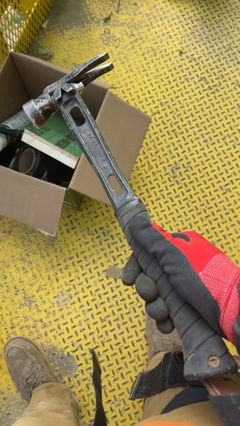
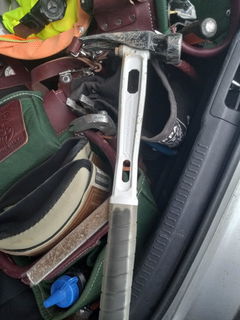
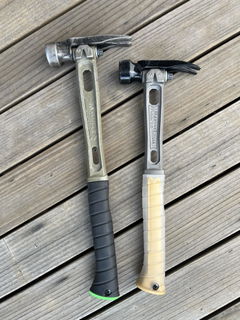
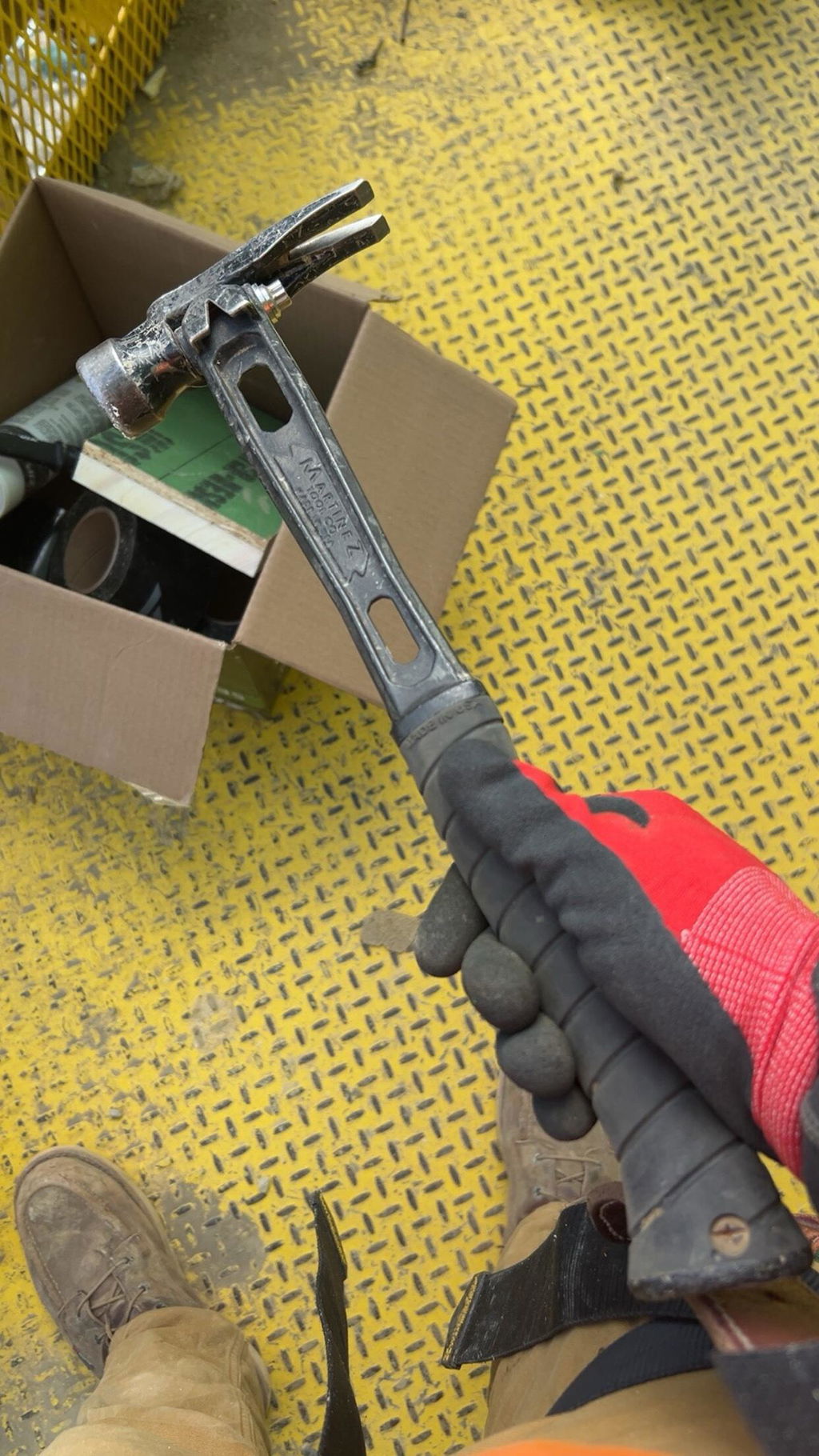
A compact hammer reduces weight without gutting functionality. The head is smaller but properly weighted. The handle is shorter but still balanced. The result is a tool that swings faster with less effort.
Reduced Fatigue on Long Jobs
Lighter tools can reduce holding and control forces — heavy tools require high levels of force simply to hold and control, contributing to muscle fatigue. That matters on eight-hour days. A compact hammer lets you maintain consistent striking without compensating for fatigue halfway through the shift, though fatigue risk also depends on posture, repetition, grip design, vibration, and task duration. For full-day framing applications where weight reduction matters most, the Lightweight Framing Hammer collection covers options built around that same principle.
Better Control in Tight Spaces
Shorter handle length improves maneuverability. You're not fighting the tool when working between studs, near corners, or overhead. The swing arc is smaller, which means more accuracy where clearance is limited.
Faster Strike Recovery
A lighter hammer may be easier to redirect between strikes, though recoil and recovery depend on head mass, swing speed, handle design, grip, and the material being struck. That speed adds up over hundreds of strikes per day.
When A Compact Hammer Outperforms A Full-Size Option
Compact hammers aren't replacements — they're better tools for specific situations.
Remodel and Renovation Work
Existing structures mean working around obstacles. A compact hammer fits where a full-size option won't. You spend less time repositioning and more time working.
Finish Carpentry and Detail Framing
Precision matters more than power. A compact finish hammer gives you better control for trim work, cabinetry, and anywhere over-striking causes problems. For a broader look at how hammer styles compare across different trade applications, A Professional's Guide to Different Types of Hammers covers the full range in practical terms.
Overhead and Ladder Work
Less weight matters when you're working above shoulder height. A compact hammer reduces arm fatigue and improves balance when you're not on solid ground.
What To Look For In A Professional Compact Hammer
Not all compact hammers are built the same.
Material Quality in the Head
A hardened steel head with quality machining and heat treatment delivers durable face consistency. The striking face should be hardened and crowned for consistent contact. Evaluate the manufacturer's material specifications, heat treatment, warranty, and intended-use guidance before buying.
Handle Construction and Length
Titanium handles reduce weight while maintaining high strength — Martinez pairs them with shock-absorbing grips. Fiberglass handles add bulk without the same performance return. Handle length should be short enough for control but long enough to generate necessary force.
Claw Design for Your Work Type
Framing claws pull nails and pry boards. Finish claws are smaller and less likely to damage material. Choose based on what you're building, not what looks aggressive. For tradesmen whose work leans heavily toward extraction and pulling, the Best Claw Hammer for Construction collection covers builds optimized for that application.
How Weight And Balance Affect Compact Hammer Performance
Weight distribution matters more than total weight.
Balance Point Location
Proper balance reduces the effort needed to control each swing — the exact balance point depends on the hammer's design, but a well-balanced compact tool shouldn't pull your wrist in either direction through the arc.
Head-to-Handle Weight Ratio
Too much weight in the head and you're fighting momentum. Too little and you sacrifice striking power. A properly balanced compact hammer keeps both in check without requiring a longer handle to compensate.
Shock Absorption Through Materials
Titanium handles with ergonomic or shock-absorbing grips may reduce perceived vibration and improve comfort, though shock absorption depends on the entire hammer design, not just the handle material.
The Best Compact Hammer For Finish And Detail Work
Finish and detail work has no margin for the wrong tool. Here's what the best compact hammer for that application actually looks like.
Martinez M4 12oz Titanium Finish Hammer
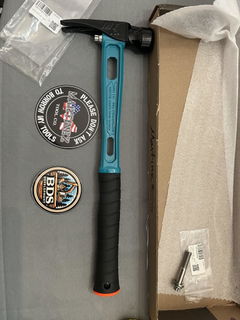
12oz smooth, dimple, or wide claw steel head. 14" titanium handle. Curved or straight grip. Light enough for all-day finishing work. Balanced for controlled, accurate strikes on applications where surface damage isn't an option. Available pre-configured or custom-built through the Martinez hammer configurator. For tradesmen weighing options across a broader range of carpentry applications, the Best Carpenter Hammer collection covers builds suited to a wider range of trade work.
- Smooth Face — clean strikes on finished nails and trim work. No texture transfer to the surface.
- Dimple Face — sets nails just below the surface in a single strike. Faster than pre-drilling a countersink on finish nail applications.
- Wide Claw — pulls finish nails in tight spaces without damaging surrounding material. Built for trim carpenters who need clean extraction on visible surfaces.
Pre-Configured or Custom Built
Choose from a range of assembled M4 configurations ready to ship, or use the Martinez hammer configurator to spec your head, handle, grip, and finish exactly. American-made, built to order, and assembled to the same standard as every tool in the Martinez lineup.
Why Pros Choose Martinez Tools For Their Compact Hammer
There's no shortage of compact hammers on the market. Here's why tradesmen who use one every day land on Martinez.
Built to a Performance Standard, Not a Price Point
The M4 isn't designed to compete on cost. It's designed to outperform — precision-balanced titanium handle, steel head machined to tight tolerances. Every spec exists for a reason.
Titanium Handle Where It Counts
14" titanium handle reduces weight and vibration compared to steel or fiberglass. In finish work, making controlled, repeated strikes all day, that reduction shows up in how your hand and wrist feel by the end of the shift.
American-Made With Full Customization
Every Martinez compact hammer is built in the USA. Choose your head style, grip, and finish through the Martinez hammer configurator, or pick a pre-configured M4 ready to ship. Same standard either way. For builds configured for structural framing rather than finish work, the Custom Framing Hammer collection lets you spec the full setup to match your production demands.
A Tool You Don't Replace
The M4 is built to last a career. Not a season. These aren't disposable tools.
Shop The Martinez Compact Hammer Built For Precision Work
Pre-configured and ready to ship, or custom-built through the Martinez hammer configurator with your choice of head style, grip, and finish. American-made, assembled to the same standard across every build.
Order direct from Martinez Tools. Free shipping within the United States, processed and out the door within 3–5 business days. No middlemen, no markups.


![[SKU][MZ5002][0]](//martineztools.com/cdn/shop/files/MZ5002-1.jpg?v=1786128224&width=500)


![[SKU][MZ5002][0]](http://martineztools.com/cdn/shop/files/MZ5002-1.jpg?v=1786128224&width=500)