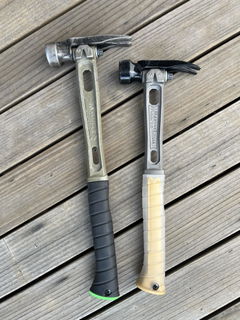
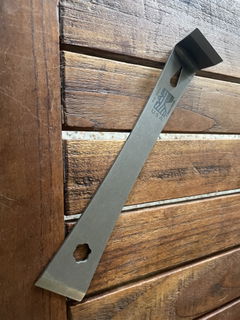
A brick hammer does two jobs. The face drives. The chisel end cuts, scores, and splits. Both sides take real abuse on masonry work, and both need to hold up. Understanding the differences between hammer types helps you match the right tool to the right application before you ever pick one up, a breakdown worth reading in our Hammer Types Explained guide.
Strike Hard Enough to Set and Drive
Masonry work requires more force per strike than standard framing. Brick, block, and stone resist impact differently from lumber. The head needs enough mass behind every strike to drive chisels, set anchors, and split material without requiring excessive swing effort.
Score and Split Clean
The chisel end scores brick and block along a line before the split. A chisel that's poorly hardened dulls fast and produces ragged splits. A properly hardened chisel end scores cleanly and splits predictably, resulting in less material waste and less cleanup.
Hold Up to Repeated Hard Impact
Masonry is unforgiving of tools. Every strike on a brick or block sends more impact energy back up the head than framing work does. The head material and heat treatment determine whether it holds its integrity through repeated loads, chips, cracks, and wear.
Handle the Conditions
Masonry work is performed under variable conditions, including dust, moisture, and debris. The hammer needs to withstand that environment without degrading in ways that affect performance or safety.
Do Both Jobs Consistently
A brick hammer that drives well but has a weak chisel end is half a tool. Both sides need to perform to the same standard across the full range of masonry applications, as the job demands.
Eliminating Wrist Fatigue And Tool Flex During Heavy Masonry Work
Masonry work returns more impact energy to the handle than framing work does. Every strike on a brick or block is a harder stop. That load accumulates fast.
Handle Material Determines How Much It Reaches Your Wrist
A titanium handle dampens vibration transfer compared to steel. On masonry work, where every strike is harder than a nail drive, that reduction per strike adds up to a measurable fatigue difference across a full shift. For a deeper look at how handle material affects performance, our breakdown of Titanium vs Steel Hammer: Which Wins for Framers covers the tradeoffs in detail.
Tool Flex Introduces Error
A handle that flexes under load shifts the strike angle mid-swing. On masonry, where you're scoring a line or driving a chisel to a specific point, flex means missed marks and ragged splits. A rigid handle holds the strike angle from start to contact.
Head-to-Handle Connection
A loose head on a masonry hammer isn't just a performance issue; it's a safety one. Tight machining tolerances between the head and handle keep the connection solid under the repeated hard impacts of masonry work.
Balance Under Load
A head-heavy brick hammer fatigues your wrist faster on overhead and angled masonry work. A proper balance between the head and chisel end keeps the tool neutral in your hand, reduces compensatory effort per strike, and reduces strain buildup through the shift.
Selecting The Best Hammer For Masonry Work And Custom Stone Cutting
The application determines the spec. Here's how to match the right hammer to the work:
Standard Brick and Block Work
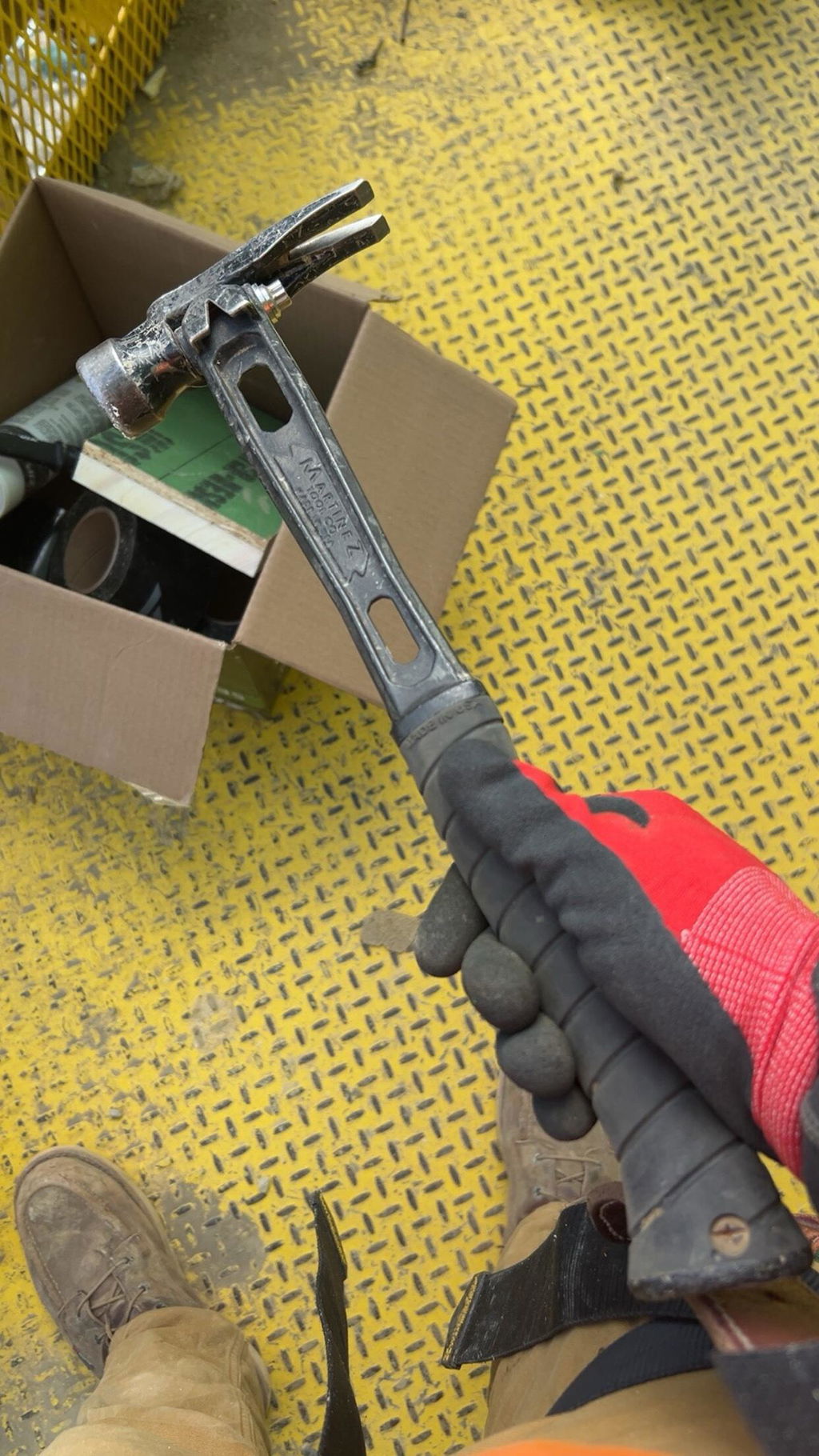
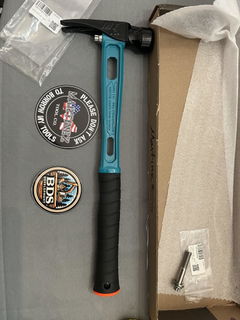
A dedicated brick hammer, striking face on one end, a hardened chisel on the other. The M2 steel brick hammer head, paired with a Martinez titanium handle, covers standard masonry driving, scoring, and splitting without switching tools.
Stone Cutting and Splitting
Stone requires more mass and a harder chisel edge than standard brickwork. Look for a head with a properly hardened chisel end rated for stone contact, not a standard finish hammer pressed into masonry use. For a comprehensive look at matching head specs to application, A Professional's Guide to Different Types of Hammers walks through the full range.
Demolition and Removal
Heavy masonry demolition requires greater force. The Martinez M79 sledge head, paired with the M1 titanium handle, delivers more mass behind every strike for breaking through block, removing mortar joints, and demo work that a standard brick hammer head isn't built for.
Examining The Physics Of A Heavy-Duty Brick Hammer Head
The brick hammer head is where the work happens. Its mass and shape decide the cut.
Mass and Momentum
Momentum is mass times velocity, and kinetic energy is one-half mass times velocity squared. At the same swing speed, a heavier head carries more kinetic energy, so it can split with less effort, but if it is too heavy, both control and fatigue suffer. The sweet spot delivers force without forcing the wrist.
Edge Geometry
The chisel edge focuses that momentum into a narrow line. A thinner, harder edge concentrates force and helps drive a clean fracture. A blunt edge spreads the force and crushes the brick rather than splitting it.
Comparing The Traditional Steel Brick Hammer To Modular Lightweight Alloys
The steel brick hammer built the trade. Alloys changed the math.
The Case for Steel
A forged steel head is dense, holds an edge, and can withstand impacts for years because forged steel can be heat-treated for strength, toughness, and edge retention. That density is its strength, and its cost. Solid-steel construction transmits more shock up the handle and loads the wrist over the course of a long day.
Where Alloys Change the Job
Pairing a hardened head with a lighter handle cuts weight where you don't need mass and keeps it where you do, at the strike. Less dead weight in the handle means less fatigue per swing without sacrificing cutting force at the head.
The Superior Ergonomics Of The Martinez Brick Hammer System
We built the Martinez brick hammer around one idea: put mass at the head, cut fatigue everywhere else. See how that philosophy translated into a real-world collaboration in the Martinez Tool Co and Kinetic Customs Brick Hammer Head video.
How We Handle Shock
We machine the head for balance and pair it with a handle engineered to absorb vibration before it reaches your hand. Less shock at the grip means you swing clean longer.
How We Handle the Edge
We harden the chisel end to hold a working edge through brick, block, and stone. You re-sharpen less and cut clean more. Precision-machined, American-made, built to be used and kept, not replaced.
Shop The Martinez Brick Hammer Built For The Job Site
The Martinez M2 Steel Brick Head. Built for masonry tradesmen who split, chip, and drive on brick, block, pavers, and stone every day. Elongated tail for clean, precise splitting. Square face for maximum surface contact on every driving strike. Steel construction machined to the same tolerances as every tool in the Martinez lineup.
Compatible with Martinez titanium handles across the M1 system, pair it with the handle you already run or build a complete setup from scratch. Made in the USA. Backed by a 30-day money-back guarantee. Order direct from Martinez Tools. Free shipping within the United States; orders are processed and out the door within 3–5 business days.