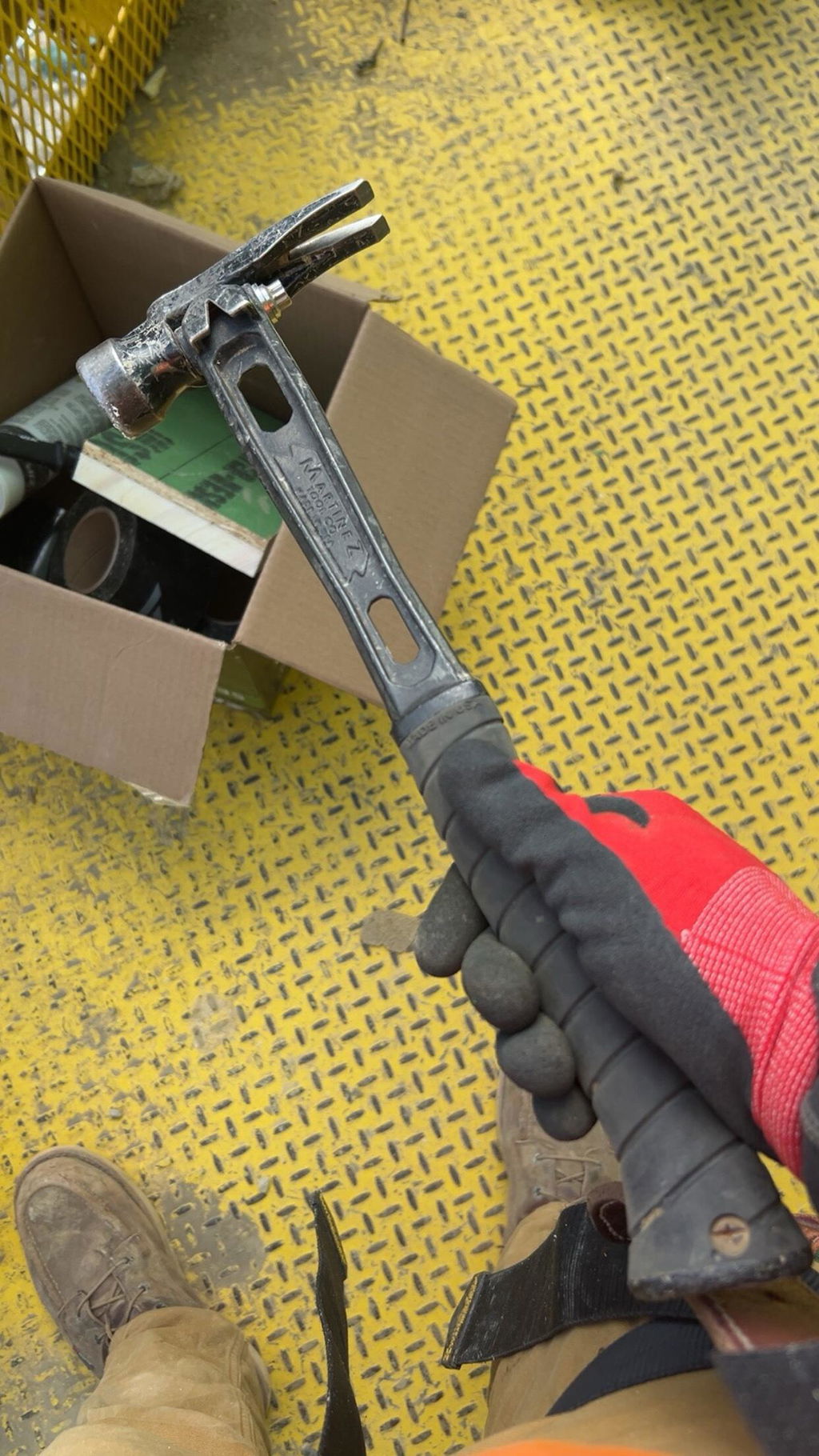
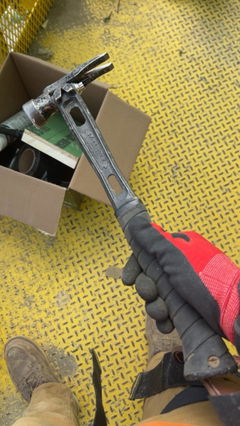
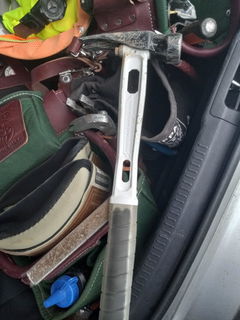
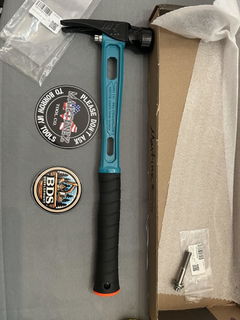
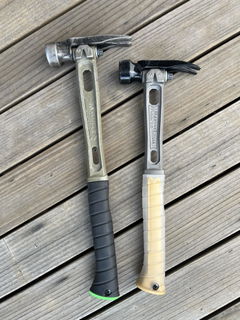
A long handle hammer extends your striking arc and can increase force delivery without adding weight to the head. This makes it effective for repetitive fastening work, overhead installations, and demolition tasks where power matters more than finesse.
Increases Swing Force Without Extra Effort
Physics is straightforward. A longer handle creates a wider arc, which can increase velocity at the point of impact when the user effectively accelerates the tool through that longer path. That means more kinetic energy potentially transferred to the fastener per strike. You're not swinging harder, you're swinging smarter.
This may reduce the number of hits needed to drive large framing nails or spikes, though the actual benefit depends on user technique, available swing space, and control. Over hundreds of strikes, that difference adds up. Fewer swings per fastener means less fatigue and faster progress.
Improves Reach for Overhead and Angled Work
Rafter installation, sheathing, and overhead framing often require awkward positioning. A standard-length handle forces you to step closer or adjust your stance repeatedly. An extended reach framing hammer gives you the distance to work from a more stable position without compromising strike quality. Better positioning reduces strain on your back and shoulders — when you're spending hours on a ladder or working at odd angles, reach matters.
Speeds Up Repetitive Fastening Tasks
Rough framing involves driving a lot of nails quickly. The M1 long handle hammer — 15oz steel head, 16-inch titanium handle — can reduce the effort required per strike, keeping your swing speed consistent throughout the day without compensating for fatigue halfway through a job. This applies to demolition work too. Breaking apart framing or pulling apart built structures benefits from the added force without having to muscle through every strike.
How Handle Length Affects Swing Power And Job Site Performance
Handle length directly influences leverage, control, and energy transfer. Understanding how these factors interact helps you choose the right tool for the task at hand.
Longer Handles Can Generate More Force Per Strike
All else equal, the longer the handle, the greater the potential arc and the higher the velocity at impact, assuming the user can effectively control and accelerate the tool through that longer path. This is basic lever mechanics.
A 16-inch hammer handle has the potential to produce more force than a 14-inch handle with the same head weight, though the actual benefit depends on user technique and swing mechanics. That extra force matters most in applications where driving power is the priority — framing nails, spikes, and heavy fasteners. Less effort per strike means you maintain consistency over longer periods.
Balance and Weight Distribution Determine Fatigue Levels
A poorly balanced long handle hammer will tire you out faster than a shorter, well-designed tool. If too much weight sits near the grip or the head isn't properly positioned, you're compensating with every swing. Balance affects accuracy as much as comfort. A front-heavy hammer pulls your strike off target. A handle-heavy tool forces you to overcompensate with grip pressure. Both lead to missed strikes and wasted energy.
Material placement matters here. A titanium handle and steel strike face keep weight where it's needed without overloading the front end. The result is a tool that swings naturally and doesn't fight you through repetitive use.
Control Becomes Harder in Tight Spaces
An extra-long hammer handle improves performance in open work but limits precision when space is restricted. Interior framing, enclosed areas, and tight corners don't allow for a full swing arc. In those situations, the added length becomes a hindrance. This isn't a flaw — it's a trade-off. A long handle hammer is built for specific applications. Knowing when to use it and when to switch to a standard-length tool keeps your work efficient.
What To Look For In A Professional Long Handle Hammer
Not all extended-reach hammers perform the same. Material quality, head design, and balance separate tools that hold up from those that don't. The hammerhead needs to deliver consistent strikes without deforming or losing effectiveness over time. Look for precision-machined construction with materials that hold up under daily use. Lower-quality manufacturing and improper heat treatment can increase the risk of cracking, chipping, or premature wear. A well-built head maintains its geometry through thousands of strikes — that consistency matters when you're relying on the tool for production work.
Handle Material and Flex Characteristics
Handle material affects shock absorption, durability, and weight. Titanium alloys are much less dense than steel and offer an excellent strength-to-weight ratio — depending on the specific alloy, absolute strength can be comparable to that of some steels while stiffness is lower, which affects vibration transmission. Traditional materials like hickory are valued for their natural shock-absorbing qualities but are susceptible to cracking and swelling under job site conditions.
Flex characteristics matter too. A handle that absorbs too much impact feels dead. One that's too rigid transfers excessive shock to your wrist and elbow. The right balance reduces vibration without sacrificing energy transfer. When components eventually need attention, our hammer parts collection carries everything needed to keep your build performing without replacing the whole tool.
Grip Design and Surface Texture
A long handle hammer requires solid grip control. Smooth handles slip. Overly aggressive texturing tears up your hands. Look for a surface that provides traction without being abrasive. Grip placement also affects control — a tool with poor ergonomics forces you to constantly adjust your hand position, leading to inconsistent strikes and fatigue over a shift.
Weight Distribution from Head to Handle End
Balance determines how the hammer feels in motion. Weight concentrated at the head increases driving force but makes the tool harder to control. Weight near the grip improves maneuverability but reduces striking power. The best long-handle hammers distribute weight to maximize both control and impact efficiency — this is where design and material selection make the biggest difference.
Long Handle Hammer Vs. Standard Length
Choosing between a long handle and a standard-length hammer depends on the type of work you're doing. Neither is universally better. Each has specific applications where it performs best.
Open Framing and Rough Carpentry
A long-handled hammer excels in open-framing environments. The added reach and potential force increase make it ideal for driving framing nails into studs, plates, and joists. You cover more ground with less effort, and the strikes stay consistent through high-volume work. Standard-length hammers work fine for the same tasks but may require more strikes per fastener and don't provide the same reach advantage for overhead work.
Rafter Installation and Sheathing
Overhead work benefits from an extended reach framing hammer. The extra length reduces the need to reposition frequently, speeding up installation and reducing shoulder strain. A standard hammer forces you into awkward positions or limits your strike angle. Over the course of a full day, that difference adds up in both speed and fatigue.
Precision Work and Finish Carpentry
A 16-inch long handle hammer is not the right choice for finish work or detail carpentry. The added length makes controlled, accurate strikes harder to execute in situations where precision matters more than power. Standard-length hammers give you better control in confined spaces and allow for more deliberate, measured strikes — the right option when you're working near finished surfaces or need to avoid overdriving fasteners. For precision work and finish carpentry where control matters more than reach, our M4 14-inch titanium finishing handles are built for exactly that application.
Why Material And Balance Matter As Much As Handle Length
Handle length gets attention, but material choice and weight distribution determine whether a hammer performs or just looks good on paper. Titanium alloys offer excellent strength-to-weight ratios because of their significantly lower density than steel. This allows for longer handles without making the tool heavy or unwieldy — a hammer that swings fast and hits hard without wearing you out.
Heavier materials add weight for comparable strength, which increases fatigue over time. A long handle hammer that's too heavy defeats the purpose of the extended reach. The M1's 16-inch titanium handle is engineered specifically for the balance and length that production framers rely on through a full shift. Shop our M1 16-inch titanium framing handles and find the build that fits your work.
Steel Provides Durability at the Strike Face
Hardened steel strike faces hold up under repeated impact. A steel head maintains its geometry and doesn't deform, which keeps strikes consistent over thousands of uses. Martinez combines a hardened steel head with a titanium handle — durability where it's needed, weight reduction where it benefits performance.
Poor Balance Negates the Benefits of Extra Length
A long handle hammer that's unbalanced will cause more problems than it solves. If the tool fights you on every swing, the extra reach doesn't matter — you're working harder just to maintain control. Balance is the result of careful design: material placement, head geometry, and handle construction all contribute. A well-balanced hammer feels natural in motion and doesn't require constant correction.
Grip Surface Affects Control Over Long Sessions
A slick grip leads to inconsistent strikes and grip fatigue. You end up squeezing harder to maintain control, which tires your hand and forearm faster. An effective grip surface provides traction without being abrasive or uncomfortable. This becomes more important with longer handles — the extended arc amplifies any control issues, so grip quality plays a bigger role in overall performance.
Shop The Martinez Long Handle Hammer Built For The Job Site
The M1 — 15oz milled steel head on a 16-inch titanium handle — is engineered for balance, built for durability, and tested in the field. Made in the USA. No shortcuts. No compromises. Browse our assembled hammers to find a pre-configured long-handle build ready to ship.