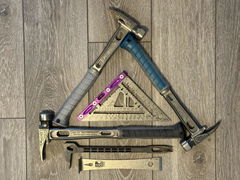
A carpenter square is a layout and measurement tool used to mark and verify right angles, straight lines, and precise cuts across woodworking and construction applications. The accuracy of everything built from a layout depends entirely on the accuracy of the tool used for layout.
What a Carpenter Square Is
An L-shaped tool with two arms — a longer blade and a shorter tongue — marked with measurement scales on both edges. The fixed 90-degree angle between the two arms is used to mark square cuts, check corners, and establish straight layout lines across lumber, sheet goods, and framing members. Some squares include additional markings for common angles and rafter tables, depending on the application.
Where It Gets Used
A carpenter's square is used at every phase of construction. Framers use it to lay out walls and mark rafters. Finish carpenters use it to set trim and verify openings. Woodworkers use it to square up joinery and mark precise cuts. It's one of the few tools that crosses every trade without losing relevance.
Why Accuracy Matters
A square that's out of calibration doesn't produce one bad cut — it produces a chain of them. Every mark made from an inaccurate reference point carries that error forward. On a framing job, it compounds into walls that won't close square. In finish work, it shows up in gaps and joints that don't land clean. The quality of the square sets the standard for everything built from it.
Which One Is Right For Your Project?
Not all carpenter squares are built for the same work. The right one depends on what you're building and what level of precision the job demands.
Framing Square
The largest of the carpenter squares, typically 16" x 24" — built for structural layout work. Used to lay out walls, mark stair stringers, calculate rafter cuts, and check large assemblies for square. A non-negotiable part of the layout toolkit for anyone doing framing work.
Speed Square
A compact, triangular square built for fast layout on the job site. Used to mark 90-degree and 45-degree cuts, guide circular saw cuts, and check angles quickly. The go-to for framers who need a reliable reference angle on repetitive cuts. Browse the rapid squares collection for every speed square configuration in the Martinez lineup.
Try Square
A smaller square with a fixed blade and handle, used in woodworking and finish carpentry for checking and marking right angles on smaller stock. Built for accuracy over speed, most useful in joinery, trim, and cabinet work.
Combination Square
An adjustable square that can be set to multiple positions along a ruler. Handles depth lines, 45-degree miters, and measurement transfers. The most flexible option — one tool that covers multiple layout tasks without swapping between squares.
Micro Square
A compact precision square built for tight spaces and detail work. Essential for fine woodworking and finish applications where a standard square is too large and precision in a small footprint matters. Browse the full micro squares collection for every available configuration — aluminum and titanium, imperial and metric.
Key Features To Look For In A High-Quality Carpenter Square
A carpenter's square is only as good as its ability to hold a true 90 degrees under daily job-site use. Here's what separates a square worth buying from one that fails you mid-layout.
Material
Aluminum and steel are the standard options. Steel is heavier but highly durable. Aluminum is lighter and corrosion-resistant. Titanium, used in select professional-grade squares, offers a favorable strength-to-weight ratio for tradesmen who prioritize both precision and reduced tool weight.
Calibration and Accuracy
A square that isn't truly square is just a piece of metal. Look for precision-machined edges and verified calibration. The tighter the manufacturing tolerances, the more reliable the reference angle over time.
Legible Markings
Engraved or etched markings hold up better than printed ones. On a job site, readability under dust, dirt, and low light conditions matters — especially when you're moving fast and need to read a measurement at a glance.
Durability
A carpenter square gets dropped, thrown in a bag, and pulled back out daily. The construction needs to hold up to that without bending, warping, or losing calibration. Thicker stock and solid construction are the baseline for any square used in professional conditions.
Size and Application Fit
Match the square to the work. A full framing square for structural layout. A speed or micro square for fast, repetitive, or detail work. The right size for the job means better accuracy and faster results without fighting the tool.
How To Use A Carpenter Square For Accurate Cuts And Layouts
A carpenter square is only useful if you know how to use it correctly. Here are the core techniques every tradesman should have down.
- Marking a 90-Degree Reference Line: Place the tongue against the edge of your workpiece. The blade extends across the face, giving you a perfect 90-degree reference line to mark and cut from.
- Stair Layout: Use the tongue for rise and the blade for run. Martinez stair gauges clamp directly onto the square to maintain consistent measurements across every stringer — no remarking, no drift.
- Rafter Layout: Rafter tables on a framing square calculate rafter lengths and roof cut angles. Match your pitch to the chart, mark your cut angle with the square, and move down the rafter.
- Checking for Square: Place the inside corner of the square against your assembly. Any gap between the square and the surface means it's out of square — catch it here before it compounds into the next step.
- Marking Repeat Angles: Clamp guides to the square to lock in a consistent angle across multiple cuts. This speeds up production work where the same angle repeats across a full run of material.
Our Carpenter Squares Deliver Professional Performance
We engineer our carpenter squares for daily job site use — machined edges and laser-engraved markings built for durability and accuracy. To see every layout tool built to the same Martinez precision standard, browse the full squares collection and find the right combination of square types for every phase of the build.
Precision Construction
Rapid Squares are machined from 7075 aluminum. The LevelLine Series™ Titanium Micro Square uses titanium construction for tradesmen who want maximum precision in a lightweight format. Both are precision-machined to hold tight tolerances through extended daily use.
Laser-Engraved Markings
Printed markings fade. Ours don't. Laser-engraved graduations stay legible through years of job-site conditions — dust, moisture, and constant handling.
Balanced Design
Weight distribution keeps the square flat during layout. No tipping, no sliding, no adjusting mid-mark.
Shop The Best Carpenter Square For Your Next Build
Every layout starts with a reliable reference. Martinez Tools builds carpenter squares for professionals who can't afford to chase errors back to a bad tool — precision-machined, American-made, and built to maintain calibration through the daily demands of real job-site use.
Martinez offers a full square lineup built for every application. Large framing squares for structural layout. Rapid squares for fast, repeatable angle work. Micro squares for precision detail applications where a standard square won't fit. Every option is built to the same standard — tight tolerances, legible markings, and construction that holds up shift after shift. Browse the full carpenter squares collection to compare every available configuration. Order direct from Martinez Tools. Free shipping on every order within the United States.