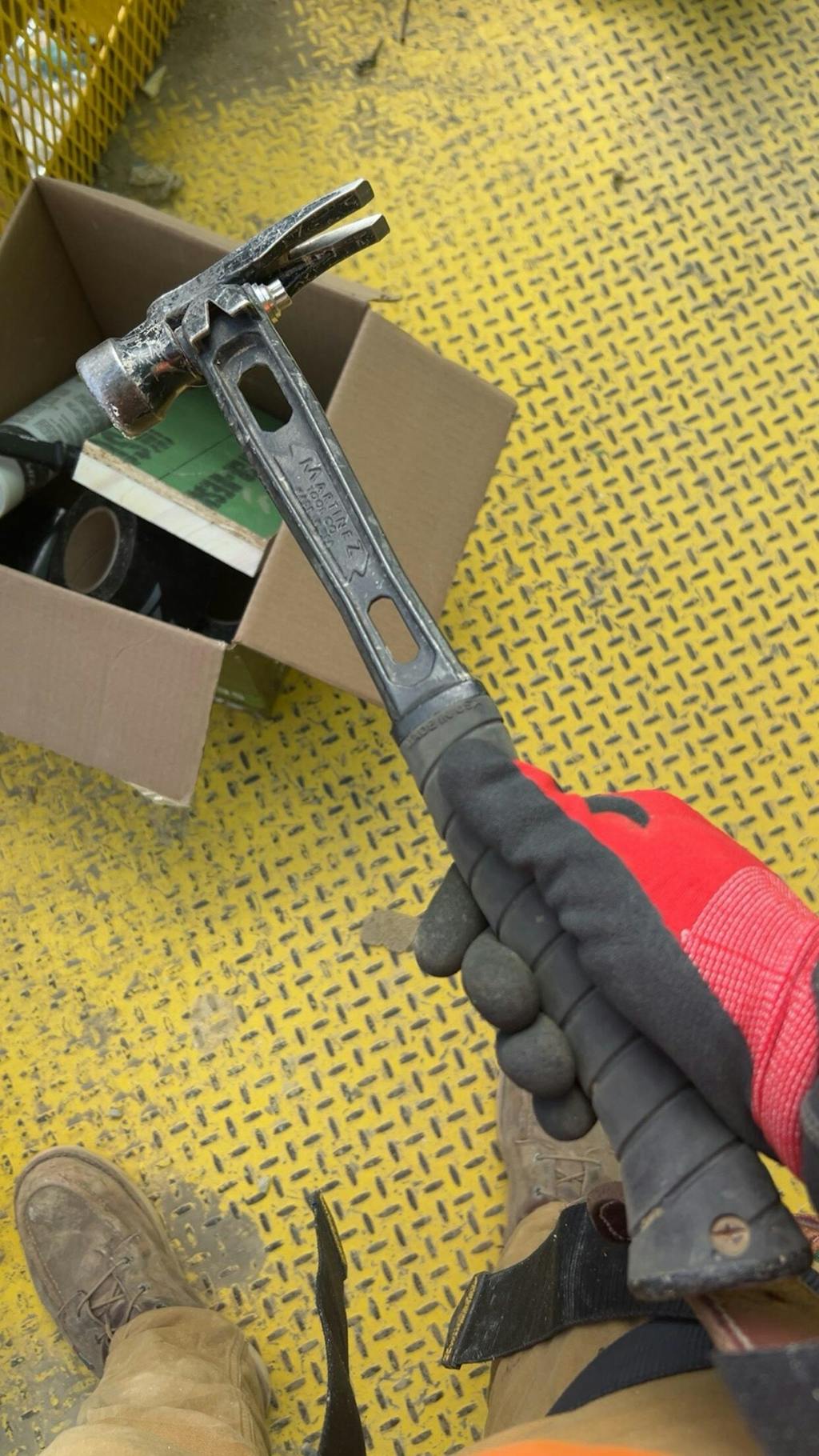
Standard steel pry bars do the job. They don't do it efficiently, and they don't do it without cost to your body. Titanium's lower density relative to steel means less mass on every motion. That adds up over a full day of demo work. Less weight means better precision and reduced strain on your wrists, elbows, and shoulders.
Impact transmission is a concern most tradespeople don't address until it's too late. Every strike, every pry, every impact sends forces through your tools directly into your hands and arms. Reducing transmitted shock may help decrease discomfort and reduce some risk factors for musculoskeletal conditions, though injury causation involves multiple factors, including technique, duration of exposure, and individual susceptibility.
Weight Reduction Without Sacrificing Strength
A titanium pry bar weighs roughly 40–45% less than an equivalent steel tool by volume. That doesn't mean it's weaker — common titanium alloys can achieve tensile strengths comparable to some steels, though this varies by grade and heat treatment. You're eliminating unnecessary mass that serves no functional purpose beyond making the tool heavier.
Impact Control That Supports Your Body
Steel transmits impact forces directly through the handle into your hand. Over time, repetitive forceful hand motions and sustained awkward postures are recognized occupational risk factors for conditions such as carpal tunnel syndrome and other musculoskeletal disorders. Titanium's lower stiffness compared to steel can alter the impact felt in some tool designs, potentially reducing perceived shock.
Corrosion Resistance for Long-Term Reliability
Titanium is highly corrosion-resistant and does not rust like steel because a protective oxide film forms on its surface. Standard steel pry bars corrode over time, especially in coastal or humid environments. That corrosion weakens structural integrity and makes the tool unreliable when you need it most.
How The Right Pry Bar Improves Jobsite Efficiency
Efficiency isn't about speed — it's about output over time without breakdown. The right pry bar lets you maintain consistent performance across long days and multiple jobs.
Most tradespeople measure tool performance by immediate results: Does it pry? Does it strike? Does it hold up under force? Those are baseline requirements. The real test is whether the tool supports sustained performance without forcing you to compensate with extra effort or recovery time.
Reduced Fatigue Means More Productive Hours
When you're not fighting the weight of your tools, you conserve energy. A lighter titanium pry bar doesn't just feel better — it extends your productive window by reducing the cumulative physical load over a shift.
Better Control Leads to Cleaner Work
Precision matters in demolition and remodeling. A lighter, better-balanced pry bar gives you finer control over the force you apply. Less collateral damage to surrounding materials, fewer mistakes that cost time to fix, cleaner results.
Durability That Eliminates Downtime
Tool failure on a jobsite creates delays and disrupts workflow. A titanium pry bar built for the jobsite is built to last — not just through one project, but through years of demanding use.
Key Features That Define The Best Pry Bar
Titanium Construction That Balances Weight and Strength
The best titanium pry bar carries the material advantages where they matter most — weight reduction without compromising leverage capacity or structural integrity. Titanium holds up under daily professional use without bending, rusting, or fatiguing.
Ergonomic Design That Fits Your Hand
Grip design affects fatigue more than most tradespeople realize. A pry bar with poorly designed ergonomics forces your hand into unnatural positions, increasing strain on tendons and ligaments. The best designs distribute pressure evenly across your palm and maintain control through extended use.
Balance Point That Reduces Wrist Strain
A poorly balanced pry bar forces your wrist to stabilize the tool during every motion. Over time, that repetitive stabilization can contribute to inflammation and discomfort. The right balance point aligns with your natural grip and reduces the need for constant wrist correction.
Durability That Extends Tool Lifespan
Disposable tools become waste. A titanium pry bar built for the jobsite is engineered to last through heavy, daily use — year after year. That's not just cost-effective; it's the standard professionals should hold their tools to.
The Martinez Advantage: Engineered For Professionals
Martinez doesn't build tools for the general market. Built for professionals who demand more and understand the difference between adequate and exceptional. Our tools are designed around the reality of jobsite work — tasks change, conditions vary. Our specialty tools and accessories are built to that standard.
Made in the USA with Small-Batch Quality Control
Small-batch manufacturing because mass production sacrifices precision. Every tool undergoes quality control to ensure consistency, durability, and performance. 100% Made in the U.S.A. — not a tagline. A commitment.
The Best Pry Bar For All-Day Demolition And Prying
Demolition work is physically demanding. The tools you use either support that work or make it harder. The Martinez titanium pry bar is built specifically for professionals who spend full days prying, striking, and leveraging.
Weight matters when you're swinging a tool hundreds of times per day. Balance matters when you're working in tight spaces or awkward positions. Reducing transmitted impact forces matters when you're trying to protect the joints that take the most strain across a career.
Reduced Weight for Extended Use
Martinez titanium pry bars weigh significantly less than standard steel options without sacrificing leverage capacity. That weight reduction translates directly to less fatigue, better endurance, and more consistent performance throughout long workdays.
Impact Management That Protects Your Joints
Designed to help manage impact forces before they reach your hand. This approach aims to reduce stress on your wrists, elbows, and shoulders — the joints most susceptible to repetitive strain from hand tool use.
Choosing The Right Pry Bar For Your Trade
Different trades have different prying demands. The best titanium pry bar for one application isn't necessarily the same tool another trade needs.
Finish Carpenters: Precision and Surface Protection
Finish work demands precision and the ability to pry without damaging surrounding materials. A lighter pry bar with smooth edges and controlled leverage prevents the collateral damage that creates extra work.
Remodelers: Versatility Across Tasks
Remodeling throws a variety of challenges daily. You need a pry bar that's durable enough to handle demolition and controlled enough for delicate trim removal.
Cabinet Work: Control and Finesse
Cabinet work requires tools that offer fine control over force application. A balanced pry bar with ergonomic grip design lets you apply precise leverage without overcorrecting or damaging expensive materials.
Build Your Professional Kit With Martinez
Martinez builds more than pry bars. If you're putting together a toolkit that holds up to daily jobsite use, our titanium framing hammers are engineered with the same philosophy — titanium handle, steel head, Made in the USA, built in small batches. The M1 15oz framing hammer and M4 12oz finish hammer are the foundation of the Martinez lineup.
Replace and Upgrade Components as Needs Change
Your toolkit shouldn't be static. As your work evolves or components wear, replace individual parts rather than buying entirely new tools. Practical for professionals managing equipment budgets and building a kit that lasts.
Invest in a System, Not Disposable Tools
Martinez tools are built for years, not jobs. A toolkit that grows with your career instead of requiring constant replacement. Keep your tools performing at their best — learn how to maintain your Martinez tools.
Exceptional Quality. 100% Guaranteed for Workmanship.
Every Martinez tool is backed by our workmanship guarantee. No defects. No compromises.
![[SKU][MTC2600][1]](http://martineztools.com/cdn/shop/files/MTC2600_1-Copy.jpg?v=1780684498&width=500)