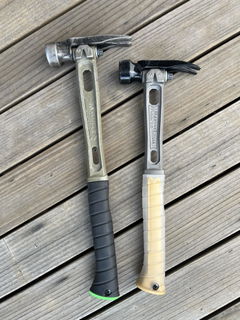
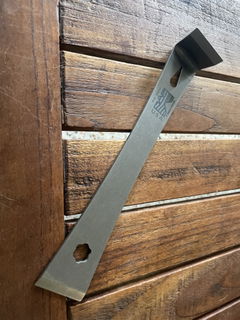
Wrist fatigue comes from repetitive shock. Titanium-handled hammers are designed to address this issue by reducing vibration and fatigue compared with conventional hammer designs. Less impact reaches your wrist, elbow, and shoulder. Over a full day, that difference is measurable.
Titanium doesn't flex like fiberglass or deaden like rubber grips. It redirects energy without adding weight. The handle stays rigid where you need control and absorbs where you need protection.
Velocity And Grip: Choosing The Best Hammer For Roofing Nails
Nail-driving speed depends on head velocity and face contact. These are the specs that decide it:
Face Type and Grip
A milled steel head concentrates force at the strike point. The waffle pattern improves grip on nail heads and may help reduce glancing blows, especially when striking at imperfect angles. Smooth faces work on flat surfaces but may lose traction on roofs.
Handle Length and Swing Arc
Handle length affects swing arc and velocity. A 16" handle gives enough reach for controlled swings without overextending on steep angles. Shorter handles limit velocity. Longer handles reduce control in tight spaces.
Nail-Starting Control
Roofers working on ladders or in awkward positions need both hands free until the nail sets. A well-balanced head and a grip that holds steady through the first tap make one-handed starts easier to control, even on an angled surface.
Weight Balance
Head-heavy hammers drive hard but tire you out. Handle-heavy hammers feel light but lack impact. A balanced hammer maintains velocity without effort.
Cross-Functional Performance: Using A Framing Hammer For Roofing Tasks
Framing hammers aren't built for roofing, but they can handle it if the specs line up. Here's what to look for:
Matching Weight and Handle Length
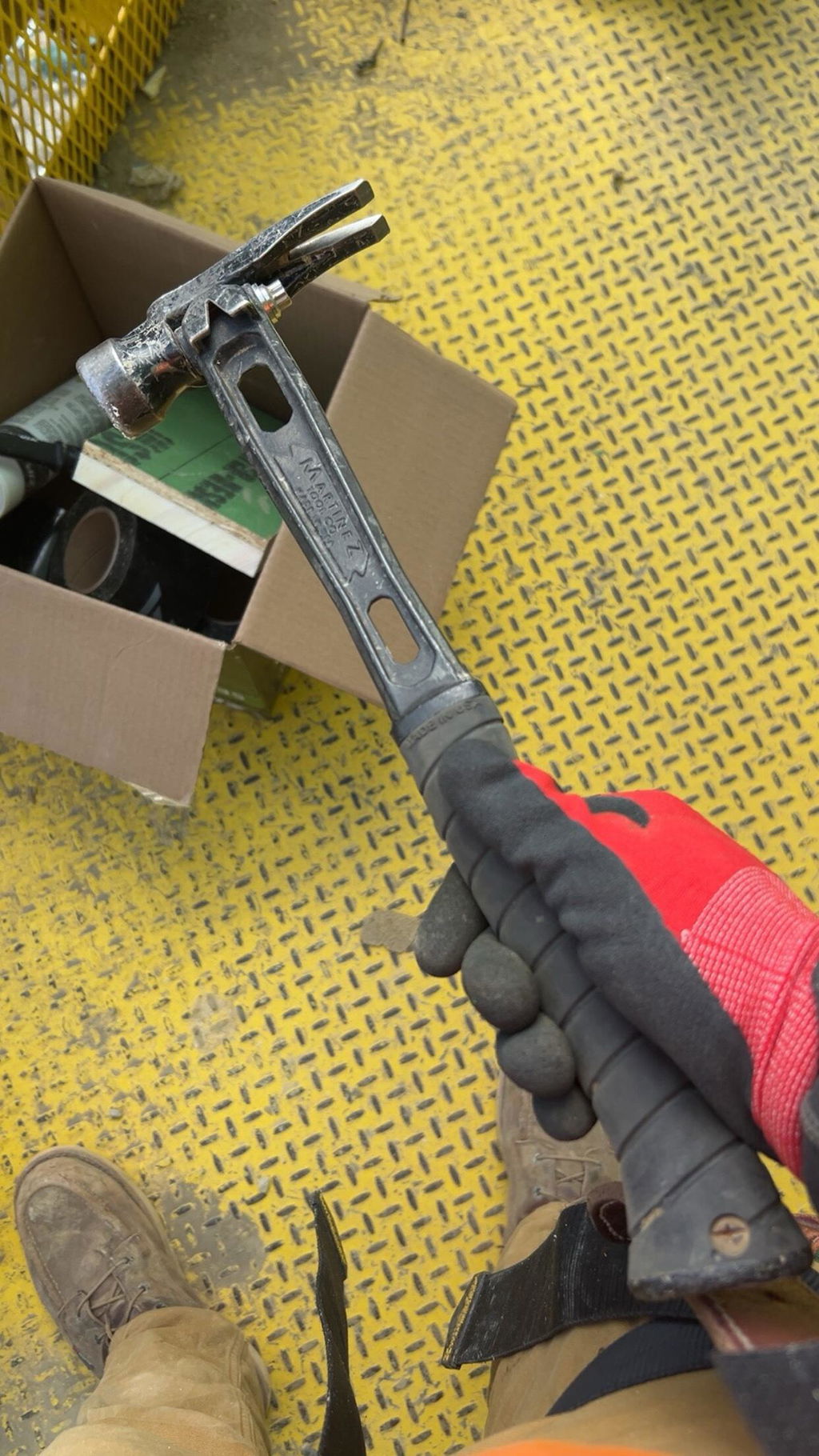
A framing hammer for roofing works when the head weight and handle length match roofing demands. Titanium framing hammers commonly run 12–15 oz, including Martinez's own M1 (15 oz) and M4 (12 oz) builds, with handles designed for horizontal swings. Roofing requires overhead and angled strikes, which change how the weight is distributed during the swing.
Claw Design for Roofing Tasks
Straight claws work for demolition and prying. Curved claws pull nails faster but limit prying leverage. For roofers pulling misplaced nails or removing old shingles, a curved claw saves time.
One Hammer, Multiple Trades
Cross-functional tools make sense for small crews running multiple tasks. One hammer for framing and roofing cuts down on what you carry up the ladder.
The Power Ratio Of A 15 Oz. Titanium Framing Hammer Setup
A 15 oz. titanium framing hammer balances driving force and swing speed. Here's the math behind why that weight works:
Why 15oz Hits the Middle Ground
The weight sits in the middle range. Heavy enough to drive 16d framing nails and roofing nails without multiple strikes. Light enough to swing repeatedly without fatigue.
How Titanium Shifts the Ratio
Titanium handles shift the power ratio. A 15 oz. steel head on a titanium handle weighs less overall than the same head on fiberglass. The lighter total weight increases swing speed without losing head velocity.
Speed vs. Mass
A lighter hammer head, swung faster, can deliver comparable impact energy to a heavier head, swung more slowly, depending on swing speed and impact conditions. Over hundreds of strikes, that effort difference compounds.
Handle Length and Leverage
Handle length affects leverage. A 16" titanium handle gives enough arc for velocity without overextending reach. Shorter handles reduce swing arc. Longer handles add control issues on roofs.
What To Look For In The Best Titanium Hammer For Roofing Conditions
Roofing conditions test durability and grip more than most trades. Here's what to check before you buy:
Handling Weather Exposure
Titanium handles don't swell or crack the way wood handles can in humid or wet conditions. They hold up through summer roofing work without degrading.
Grip in Hot Conditions
Grip matters on hot days. Textured titanium handles maintain traction without adding rubber or foam that wears out. Sweat doesn't affect grip the same way it does on smooth steel or worn leather.
Replaceable Components
Replaceable faces extend tool life. Steel faces wear down from repeated contact with nail heads. A hammer with replaceable faces lasts longer than one that requires a full head replacement — Everything Is Interchangeable with the Martinez Hammer shows just how far this modularity extends across the lineup.
Balance for Overhead Work
Weight balance affects overhead work. A titanium roofing hammer should feel neutral at rest and controlled during the swing. Head-heavy hammers tire you out on angled strikes. Handle-heavy hammers lack driving force. For a deeper breakdown of how balance is engineered into these tools, see Weight of the Martinez Hammer Explained.
Steel Quality
Look for a hammer head made from properly hardened tool steel and rated for striking use. Durability depends on the steel, heat treatment, design, and manufacturing process. If you're still narrowing down which style suits your work, Hammer Types Explained: Choosing the Right Hammer Every Time is a useful starting point.
Why Pros Choose Martinez Tool Co. For Their Titanium Roofing Hammer
We build hammers for tradesmen who work every day. Here's what that standard looks like in practice:
Engineered for Shock and Durability
Our titanium handles are machined and tested for shock absorption and durability. We use milled steel heads designed for velocity and nail contact. Every hammer is balanced for real working conditions, not showroom floors.
Built to Hold Up
Roofers choose our tools because they hold up. Titanium handles resist the splintering that can affect wood over time. Steel heads maintain their integrity. Grips don't wear out after a season.
Function Over Features
We focus on function over features. No unnecessary additions. No gimmicks. Just tools that work as hard as the people using them. Read more about that philosophy on our About Our Workmanship page.
Made in the USA
Our hammers are built in the U.S. with materials and machining we stand behind. When a tool carries the Martinez name, it's designed to last for years of job-site use.
Shop The Martinez Titanium Hammer Built For Roofing Crews
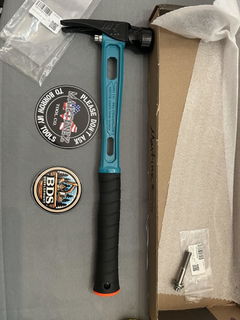
The M1 15oz titanium framing hammer is built for roofing work. Milled or smooth steel head, 16" titanium handle, curved or straight grip. Browse pre-configured M1 options or build your own through the hammer configurator, choosing your head, handle color, and grip. If you're still deciding between models, Which Martinez Hammer Is Right for Me can help point you to the right fit.
Need a replacement part instead of a full hammer? Martinez sells handles, heads, and grips separately, so you can swap a worn component without replacing the whole tool. Order direct from Martinez Tools. Free shipping within the United States, processed and out the door within 3–5 business days.


![[SKU][MZ4501_RD][0]](//martineztools.com/cdn/shop/files/MZ4501_RD-1.jpg?v=1783708112&width=500)


![[SKU][MZ4501_RD][0]](http://martineztools.com/cdn/shop/files/MZ4501_RD-1.jpg?v=1783708112&width=500)