Trim work has no margin for error. Here's what the finish hammer for trim work needs to handle:
Controlled Strikes
12oz head weight. Heavy enough to drive finish nails clean, light enough to control every strike. Too much weight and you blow through the surface. Too little and you're hitting twice.
Surface Protection
Smooth or dimpled face. No texture transfer to the work. A milled face built for framing leaves marks on trim that wasn't built to take them.
Balance
Weight distribution between head and handle that doesn't fight your wrist on repeat, controlled swings. Precision work runs on accuracy, not force.
Reduced Vibration
A titanium handle reduces vibration transfer compared to a steel handle. On trim work, where you're making hundreds of small, controlled strikes a day, that difference shows up in your hand by the end of the shift.
A Handle Built for the Application
14" — shorter than a framing handle. Built for tight spaces, controlled arcs, and the kind of detail work where a 16" swing has no business being. For a broader breakdown of how hammer types differ across trades, check out Hammer Types Explained: Choosing the Right Hammer Every Time.
Why A Framing Hammer Falls Short On Trim Applications
Framing hammers are built for speed and impact. Trim work requires precision. Check out the difference below:
Excessive Head Weight
A 20+ oz framing hammer drives 16d nails into studs more efficiently. That same weight over-drives finish nails, splits delicate trim stock, and crushes wood fibers around nail heads.
Aggressive Face Texture
Waffle or dimple faces grip nail heads during framing, but can leave visible textured impressions on finished surfaces. One mis-strike marks a baseboard or casing that has to be replaced or filled.
Handle Length and Swing Arc
Longer handles increase striking force, which is necessary for framing, but are counterproductive for trim. A shorter handle on a lightweight hammer for trim nails can improve maneuverability and control in confined trim applications. For a deeper dive into how different hammer categories stack up, see A Professional's Guide To Different Types of Hammers.
Smooth Face vs. Dimple Face: Choosing The Right Trim Hammer
Both faces are built for finishing work. The application decides which one. Here’s how to choose:
Smooth Face
Clean strike. No texture transfer to the surface. Built for trim, molding, and any application where the surface stays visible in the finished product.
Dimple Face
Sets the nail just below the surface in a single strike. Faster than pre-drilling a countersink. Built for finish nail applications where a clean, consistent set matters as much as the strike itself.
When to Use Smooth
Trim installation. Casing. Baseboard. Crown molding. Any surface where a flat, unmarked strike is the standard.
When to Use Dimple
High-volume finish nailing where the setting depth needs to be consistent across every nail. Cuts a step out of the process without sacrificing the clean set.
The Martinez M4
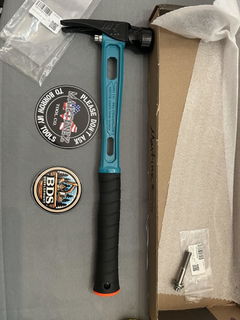
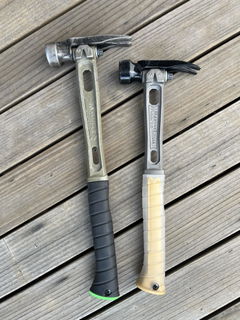
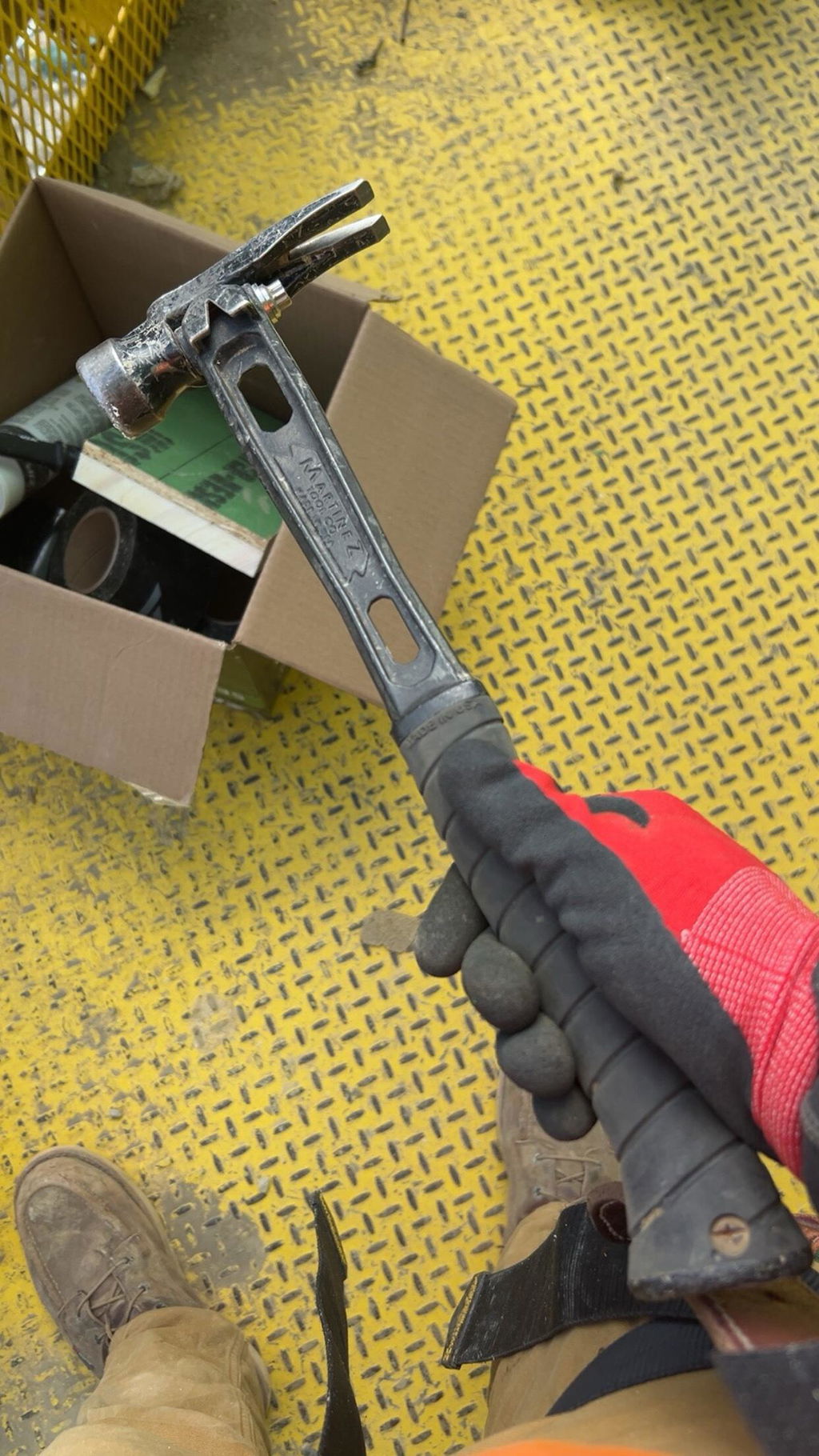
Available in smooth, dimple, and wide claw configurations. 12oz steel head. 14" titanium handle. Build the spec that matches your work through the hammer configurator. Grip preference matters here, too. For a closer look at how grip shape affects feel and control, see Curved vs Straight Grips.
What To Look For In A Professional Trim Carpentry Hammer
A professional-grade trim carpenter hammer balances weight, grip, and durability for daily use.
Lightweight Head Weight
Lighter heads improve control. A common weight for finish work is around 12 oz, though finish hammers are available in a range of 7–16 oz.
Titanium vs. Steel Construction
Titanium offers a high strength-to-weight ratio and corrosion resistance, and many professional models are designed for long service life. Some premium titanium hammers incorporate steel striking faces for added durability.
Grip Design That Stays Secure
A textured or contoured grip prevents slippage during repetitive strikes. Smooth handles lose traction when hands sweat or get dusty on the job site.
Balance Point Near the Head
Proper balance reduces the effort required to control the swing. A head-heavy hammer improves driving efficiency. A handle-heavy hammer sacrifices control. If you're building out a full kit alongside your hammer, this rundown of Carpentry Tools List: 25 Must-Have Tools for Every Level covers the essentials worth having on hand.
How Weight And Balance Affect Accuracy On Trim Work
Trim work runs on control. Weight and balance determine how much of it you have.
Head Weight
12oz is the standard for trim. Heavy enough to set a finish nail in one or two clean strikes. Light enough to control the swing on detailed applications where a miss means a repair.
Balance Point
Weight distribution between head and handle determines how the hammer swings. A front-heavy hammer pulls your wrist off line on controlled strikes. A balanced M4 puts the tool in a natural, repeatable arc.
Handle Length
14" for trim, shorter than a framing handle. Less arc, more control. The shorter length keeps the swing tight and accurate in confined spaces where a longer handle has no room to work.
Why It Compounds
Every strike on trim work is visible in the finished product. A hammer that's slightly off in weight or balance doesn't just slow you down; it shows up in the work. Accuracy on trim isn't optional. The tool has to support it on every single swing.
Why Pros Choose Martinez Tool Co. For Trim Carpentry Hammers
Trim carpenters who use the M4 every day land on Martinez for a few specific reasons. Check these out:
Titanium Handle, Less Vibration
14" titanium handle. Less vibration transfer than steel on every strike. Across hundreds of controlled hits a day, that reduction matters in how your hand and wrist feel by the end of the shift.
A Head Lineup Built for the Application
Smooth, dimple, and wide claw, each one machined for a specific trim application. Steel construction, precision tolerances, compatible across the full M4 handle system.
Curious how the M4 stacks up against other models in the lineup? Take a look at this Review of the M4 and M1 Martinez Hammer.
Full Customization
Choose your head, handle color, and grip through the Martinez hammer configurator. Or pick a pre-configured M4 ready to ship. Same standard either way.
American-Made
Built in the USA to tight manufacturing tolerances. Consistent balance, consistent performance, build after build.
Replaceable Parts
Heads and grips sold separately. Swap a worn component without replacing the whole hammer.
Shop The Martinez Hammer Built For Trim Carpentry
The M4 12 oz titanium finish hammer. Smooth, dimple, or wide claw steel head. 14" titanium handle. Curved or straight grip. Pre-configured and ready to ship, or custom-built through the Martinez hammer configurator.
Order direct from Martinez Tools. Free shipping within the United States, processed and out the door within 3–5 business days. Shop the Martinez M4 today and put a trim hammer in your hand, built for the precision the work demands.


![[SKU][MZ5002][0]](//martineztools.com/cdn/shop/files/MZ5002-1.jpg?v=1783708568&width=500)


![[SKU][MZ5002][0]](http://martineztools.com/cdn/shop/files/MZ5002-1.jpg?v=1783708568&width=500)